Pool Design: Jumping Right In
Designing your pool doesn’t need to be a complicated task. You might have an idea of what you want it to look like, but how do you get there? We want you to have a clean, beautiful pool that you can enjoy safely for many years, not one that’ll put you in a place of debt and disappointment. We get to design and guide both homeowners and businesses through the process of matching the pool design to their lifestyle every day.
Backstroke or Butterfly?
When you start planning a pool, there are a lot of things to consider and a lot of boxes to check. Some of the questions we ask are:
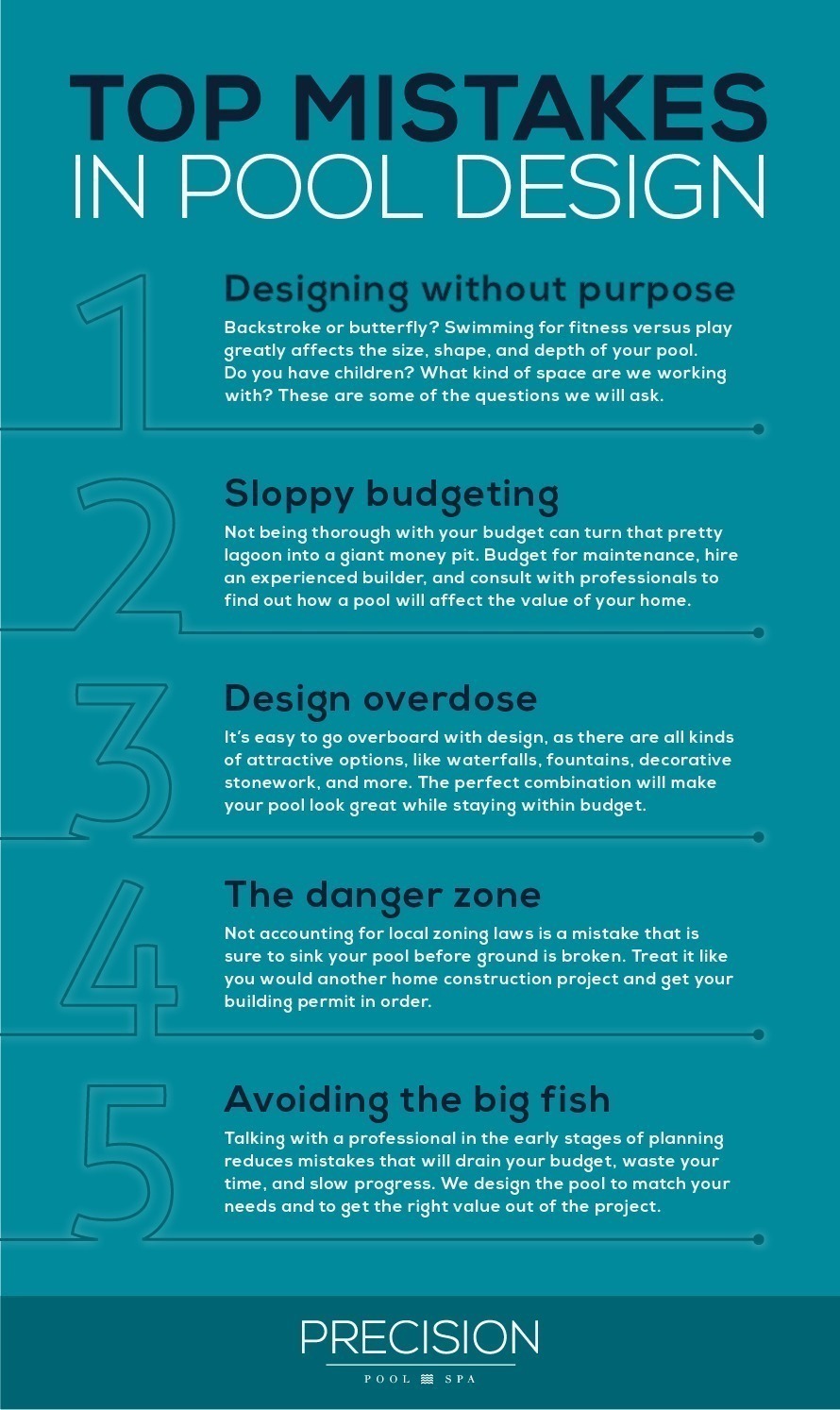
- Do you want to swim laps, splash around, or catch the rays on a float? Swimming for fitness versus play greatly affects the size, shape, and depth of your pool.
- Do you have children? Safety is our top priority, and we take extra precautions to keep little ones safe while we design a pool appropriate for their use and a pool that grows with them for years to come.
- What kind of space are we working with? A wide-open, flat yard offers more freedom than a smaller space with trees that will drop debris where hills give us unique design ideas for waterfalls and more.
These are only a few of the factors that we keep in mind. Sometimes knowing what not to do gives us a better idea of what to do. Let’s cover some of the more common mistakes and how to avoid them in pool design.
Sloppy Budgeting
You might think that you’re taking everything into consideration when budgeting to build a pool, but it’s worth engaging a professional to take a look at your project. A well-planned pool can add a lot of value to your property and a lot of enjoyment to your leisure time, but not being thorough with your budget can turn that pretty lagoon into a giant money pit. We suggest:
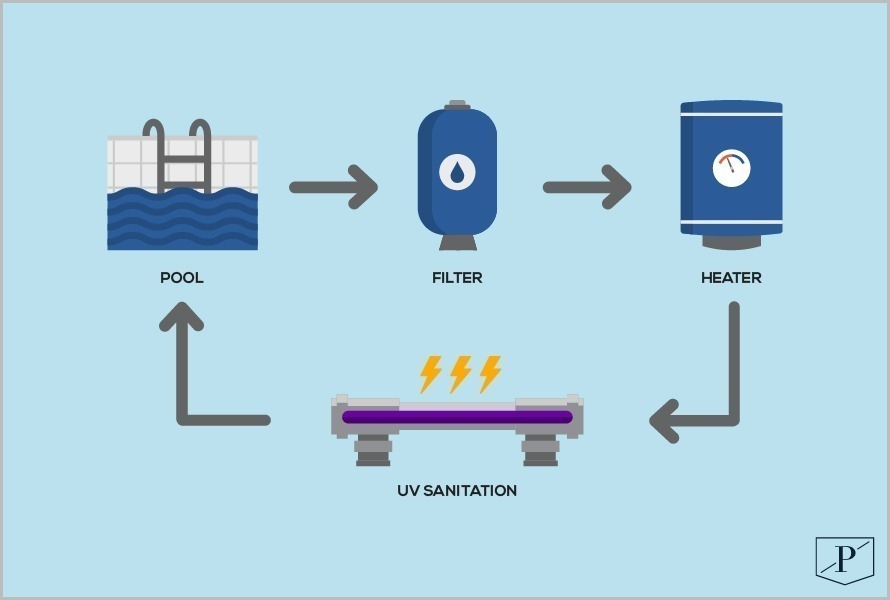
- Budget for maintenance. We can help you find the right sanitation system and put the right tools in place to keep your pool pristine in a manageable way.
- Experience = value. While we can tell you that mistakes cost money and try to give you a guide on how to avoid them, an experienced eye on the project will spot mistakes we can’t cover in any guide.
- Budget for value. Consult with professionals like your financial advisor and real estate agent to get an idea of how much a pool or spa could affect your financial outlook. Pools can make a property harder to sell, so if you are planning on selling your property, a pool could be a liability.
Design Overdose
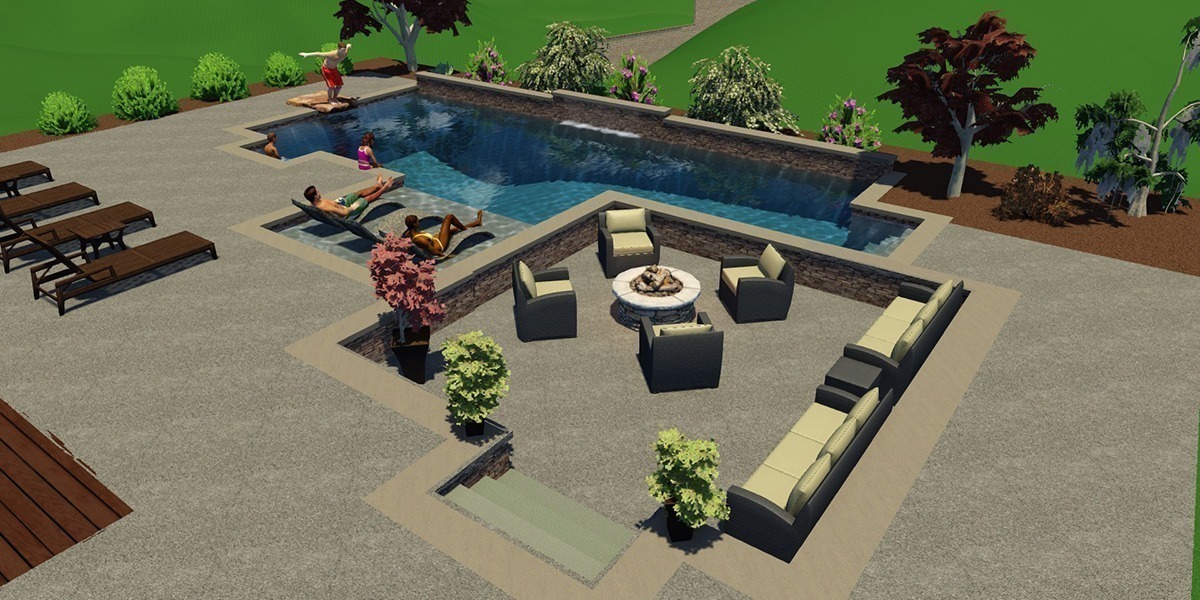
Pool design impacts more than just use. Choosing the wrong design can make your pool impossible to maintain as well as increasing cost. It’s easy to go overboard on making your pool beautiful, as there are all kinds of attractive options, like waterfalls, fountains, decorative stonework, tanning ledges, and more. We’ll help you come up with the perfect combination to make your pool or spa look great while staying within budget.
Think about what you’re actually going to use. We bring a very realistic approach to pool design and having a deep end to a pool that nobody really uses any more, can move that financial dial by thousands. Are you planning to socialize poolside? Maybe a free-edge design that facilitates movement would be better than a long rectangle. Do you want your pool to be the defining feature of that space or would you rather have it compliment your surroundings?
Whether you like it sleek and minimal or are set on a adventure paradise, making smart design decisions from the beginning will make you much happier with the end result.
The Danger Zone
Not accounting for local zoning laws is a mistake that is sure to sink your pool before ground is broken. Treat it like you would another home construction project and get your building permit in order. New York building permits must account for environmental factors like the water table and where the sewer lines are. Every New York pool built or altered after December 2006 must include equipment like a state-approved alarm and a secure barrier around the pool to prevent entry, with inspections conducted multiple times throughout construction.
Precision Pool and Spa is well-versed in New York zoning laws for swimming pools and will help you make sure that everything is approved and complies with local regulations.
Swim with the Big Fish
We love seeing our clients’ dreams for their ultimate pool or spa come true, and to make that happen in the most efficient way possible, it helps for us to be involved from the beginning. That way, we can guide design the process as well as the pool to streamline your project from start to finish.
Dave always says, “It’s always about finding the right VALUE to the project.”
Talking with a professional in the early stages of planning your pool or spa reduces mistakes that will drain your budget, waste your time, and slow progress. We want to avoid all of that. Whether we are designing a backyard spool or hotel lodge retreat we design the pool to match your needs and make sure to get the right value out of the project.