Categories
Blog News Pool Maintenance

Storm Prep for Your Pool: Answers for Syracuse Homeowners

Central New York weather keeps pool owners on their toes. A strong line of thunderstorms can bring inches of rain and damaging wind in a single evening, and your pool is a significant investment worth protecting. These are the questions the Precision Pool & Spa team hears most often when a storm is in the forecast, along with our recommendations.

Should I lower the water in my pool before a storm?

Only if it’s already high. When the water is at the top of the tile line or the coping, bringing it down a few inches leaves room for rainfall and helps keep debris from washing in as the pool overflows. If your level is normal, you can leave it alone.

Would it be safer to drain the pool completely?

No, and this is one of the most damaging mistakes a pool owner can make. The water in your pool provides the weight that holds the structure in place. When the ground is saturated after heavy rain, an empty pool can be damaged by the pressure of groundwater beneath it. A few inches is the most you should ever remove.

What should I do with my patio furniture and pool accessories?

Store them. Lounge chairs, umbrellas, cushions, floats, planters and toys can all be picked up by strong wind. Moving them into a garage or pool house protects the pieces themselves and keeps them from ending up in the water or striking your equipment, fencing or home.

Do I need to adjust my chemicals ahead of time?

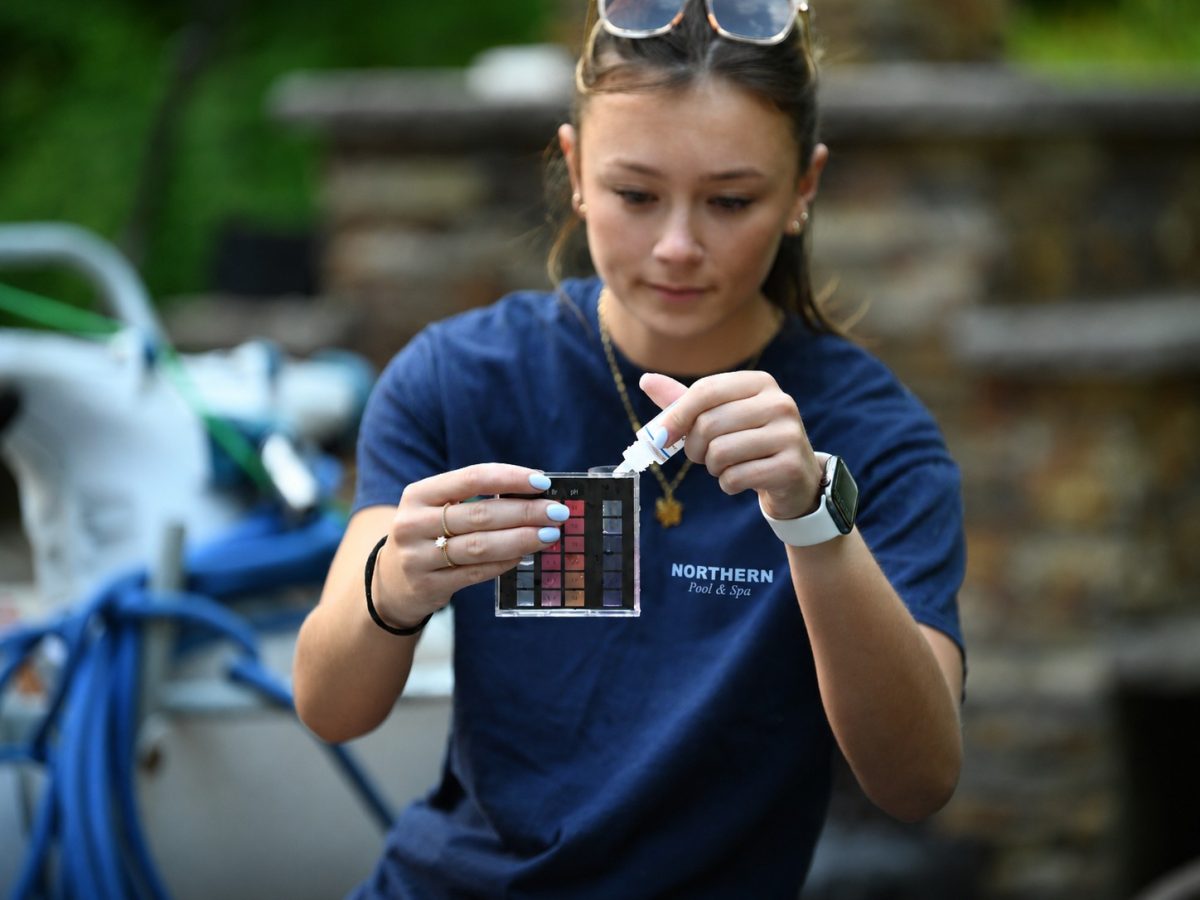
It helps. Heavy rain and the leaves and dirt that come with it use up sanitizer quickly. Testing and balancing your water before the storm gives it the best chance of staying clear and shortens the recovery afterward.

Should I close my automatic cover?

We recommend leaving it open during significant rain and wind whenever possible. Most homeowners expect the opposite, but a closed cover has to bear the weight of rainwater, debris and any limbs that fall on it. That stress can damage the fabric, tracks, ropes and pulleys. Cleaning the pool after a storm is generally much easier and less expensive than repairing or replacing an automatic cover system.

Is there anything I should do during the storm?

Stay indoors and let it pass. Please don’t try to skim the pool, pull out debris or check on your equipment while the weather is active. Lightning, high wind and wet electrical equipment are a dangerous combination. It’s also worth knowing where your pool equipment breaker is before the storm arrives, in case you need to shut the power off afterward.

What’s the first thing to check when the storm is over?

Your equipment pad. Before turning the system on, look for flooding or standing water around the pump, filter and heater. If you find any, shut off power to the pool equipment and contact us once it’s safe. If the system is running and you hear something unusually loud, or it just doesn’t seem right, turn it off and call us so a technician can take a look.

How do I get my pool clean and clear again?

Skim leaves and branches from the surface and empty the skimmer and pump baskets before running the system. Then test the water. Rain and runoff will have shifted your pH, alkalinity and sanitizer, so plan to rebalance and shock the pool. Large debris, or anything you’d rather not handle, can be left to our team.

Can Precision take care of the cleanup for me?

Yes. Our Syracuse team offers post-storm service that includes debris removal, water balancing, filter cleanings and a full check of your equipment, so your pool is back to its best with no effort on your part.

Questions After a Storm? Call Precision Pool & Spa

If you have concerns once the weather clears, our team is here to help. Contact Precision Pool & Spa to schedule a post-storm cleanup or service visit in the Syracuse area.
Categories
Blog News Pool Maintenance

Getting Your Rochester Pool Ready for Winter: What You Need To Know About Fall Closings & Maintenance

If you’ve spent a winter in Rochester, you know we don’t get a gentle transition into cold weather. It’s time to start thinking about closing your pool before the first real freeze hits, and doing it right makes all the difference come spring.

Why a Proper Closing Matters Here

Rochester winters are long and unforgiving, and a pool that isn’t closed correctly pays for it. Water left in pipes, pumps, and filters freezes and expands as temperatures drop, and that expansion can crack equipment that’s expensive to replace. A proper closing protects:

  • Your pump, filter, and heater from freeze damage
  • Pool surfaces and liners from staining over the winter
  • Water chemistry, so spring opening isn’t a fight with algae
  • Your cover, fitted and secured to hold up through lake effect snow

How Precision Pool & Spa Closes Your Pool

Our technicians take care of every step so nothing gets overlooked:

  • Skim, brush and vacuum if applicable
  • Lower water levels as required
  • Winterize and plug all plumbing lines
  • Removing handrails
  • Shock pool with granular chlorine and algaecide
  • Raise safety cover anchors and install safety cover (if anchors are seized, further service may be necessary)
  • Remove UV if applicable to be stored indoors

*Your pool must be properly maintained up to the date of pool closing. Please make sure your side of your autofill has been winterized prior to the scheduled pool closing if applicable to prevent freeze damage. Please do not turn off your filter system prior to our technician’s arrival.

Handle Repairs Before Winter Takes Over

Fall is your last real chance to deal with anything that came up over the summer. A pump running rough, a heater that hasn’t kept up, or a leak you’ve been putting off are all easier and cheaper to fix now than after months of freezing and thawing. We can often bundle a service visit with your closing appointment.

When to Schedule Your Closing

Timing matters more in Rochester than most places. Close too early and you lose usable pool days. Wait too long and an early freeze could catch your pool unprepared. Once nighttime temperatures start settling into the 50s, it’s time to get on our schedule. Fall books up fast around here, so calling early means more flexibility.

While You Wait

If your closing date is still a few weeks out, keep skimming leaves and debris so nothing sinks and stains the pool floor, and keep testing your chemical levels as cooler weather and lighter use throw things off balance.

Let’s Get Your Pool Winter Ready

Precision Pool & Spa is ready to handle your fall closing and any service needs so your pool is protected through everything Rochester winters bring.

Contact Precision Pool & Spa today to schedule your fall closing and service appointment.

Categories
Pool Restoration / Remodel

Best Time of Year to Schedule Pool Renovation

In Western and Upstate New York, timing a pool renovation isn’t just a matter of convenience. It’s a strategic decision. With one of the shorter pool seasons in the Northeast, losing even a few weeks of summer to a renovation that could have been done in the off-season is a real cost. Getting the timing right means your pool is ready when the weather is, and you’re not watching your swim season disappear while work is still being finished in your backyard.

Fall Is the Smartest Move

The single best time to schedule a pool renovation in is right after closing. Once your pool is winterized and covered, it’s out of commission until spring anyway. That’s three to four months of downtime that can be put to work.

Booking your renovation in the fall accomplishes several things at once. Your contractor has access to the pool without any disruption to your swim schedule. Material lead times are shorter in the off-season when demand is lower. Crews have more availability and can give your project more focused attention than they can during the peak summer rush. And perhaps most importantly, you have a realistic chance of being fully completed and ready to open on time in the spring rather than scrambling to finish before Memorial Day.

Winter: More Viable Than Most People Think

A lot of homeowners assume pool renovations can’t happen in winter, but that’s not entirely accurate. Equipment upgrades, automation installs, coping replacement, and some tile work can be completed during winter months without weather being a significant obstacle. Interior resurfacing is more temperature-sensitive and requires the right conditions, but mild stretches during a Central New York winter can provide workable windows.

The more important point about winter booking is simply this: you’re ahead of the crowd. Every week you wait past November is a week closer to spring, when every other pool owner who put off their renovation decision is suddenly calling at the same time.

Early Spring: A Narrow but Workable Window

If fall and winter have passed and you’re just now thinking about a renovation, early spring is your last realistic shot at getting it done before swim season. A project that gets started in February or March has a reasonable chance of wrapping up before the weather turns and you want to be in the water.

The catch is that this window is genuinely narrow. In areas like Western and Upstate NY springs move fast, and once the warm weather arrives, so does peak demand for contractor time. A project that doesn’t get started until April or May is very likely to eat into summer. And plaster and finish work requires stable temperatures to cure properly, which early spring in Rochester doesn’t always guarantee.

What to Avoid

Late spring and early summer renovations are the hardest to execute well. Contractor schedules are booked deep. Material lead times stretch. And the pressure of wanting to be swimming by a specific date can lead to rushed decisions that affect the quality of the finished product. If you find yourself in this position, an honest conversation with your contractor about realistic timelines is worth having before committing to a scope of work.

Start Earlier Than You Think You Need To

The most common regret pool owners have about renovation timing is not starting the conversation sooner. Even if you’re not ready to commit to a full project, getting a consultation on the calendar early puts you in a much better position. Renovation slots fill up faster than most people expect, and the best contractors book out well in advance of the season.

Precision Pool and Spa works with Rochester including Western and Upstate NY homeowners on pool renovations throughout the off-season and into spring. If your pool needs attention before next summer, now is the time to reach out. Contact us today to get on our schedule.

Categories
Pool Restoration / Remodel

Pool Tile vs Coping vs Plaster vs Bond Beam. What Needs Replacement and When?

A pool is made up of a lot of individual components and they don’t all age at the same rate. Some things need attention every decade or so. Others can go much longer with proper care. And a few, if ignored long enough, can turn from a cosmetic issue into a structural one. For Rochester including Western and Upstate NY pool owners who put their pools through significant seasonal stress every year, knowing what to watch for and when to act makes a real difference in the long-term cost and condition of your pool.

Waterline Tile

Waterline tile runs along the perimeter of your pool right at the surface of the water. It’s there partly for aesthetics and partly for function, creating a cleanable border that protects the pool shell from the chemical and biological activity that happens at the waterline.

Quality pool tile can last anywhere from 10 to 25 years, but Western and Upstate New York pools face some specific challenges. Freeze-thaw cycles put real stress on tile and the adhesive holding it in place. Water that gets behind a loose tile and then freezes can pop additional tiles off quickly. Calcium scaling along the waterline is extremely common and often looks worse than it is. Scaling can frequently be treated with a good cleaning rather than replacement. Cracked, loose, or missing tiles are a different matter and should be addressed promptly before water infiltration causes bigger problems.

Coping

Coping is the cap that runs around the top edge of your pool wall. It’s the transition point between the pool and the deck, and it takes a lot of physical wear. Swimmers push off it, furniture scrapes across it, and it expands and contracts with every temperature swing through a season.

Concrete and brick coping typically holds up for 20 to 30 years before needing significant attention. Natural stone and paver coping can last longer with proper care and sealing. What to watch for includes cracking, lifting sections, and gaps that open up between coping pieces. Beyond the appearance issue, damaged coping allows water to get into the bond beam beneath it, and that’s where a manageable repair can turn into something more serious if left alone.

Interior Plaster and Finish

Your pool’s interior surface takes more abuse than any other component. It’s in constant contact with chemically treated water, exposed to UV when the pool is partially empty, and subject to the physical wear of swimmers and cleaning equipment.
Standard white plaster typically lasts 7 to 12 years before it needs to be resurfaced. The warning signs are hard to miss when they show up. Rough texture that wasn’t there before. Staining that won’t respond to chemical treatment. Visible pitting or etching across the surface. Areas where the plaster has begun to separate from the shell beneath it.

Premium finishes like quartz and pebble aggregate offer a meaningful durability upgrade, typically lasting 15 to 20 years before resurfacing is needed. They cost more upfront but the extended lifespan and improved appearance over time make them worth considering, particularly for pools in demanding climates like Rochester including Western and Upstate NY.

The Bond Beam

The bond beam is the structural band of reinforced concrete that runs around the top of your pool shell, tying the walls together and anchoring the coping above. Most pool owners never think about it until something goes wrong, but it plays a critical role in the structural integrity of your pool.

Cracks in the bond beam are serious and shouldn’t be ignored. They allow water to penetrate deep into the structure, which accelerates deterioration and can compromise the pool shell itself over time. Bond beam problems often show up indirectly. Coping that keeps cracking or shifting. Tile that comes loose repeatedly in the same area. Gaps that reappear after being filled. If you’re seeing a pattern of repeated issues in a specific section of your pool, the bond beam is worth having assessed.

Thinking About It as a Whole

Individual components rarely fail all at once, but renovation time is a natural opportunity to look at everything together. Addressing tile, coping, and interior resurfacing in a single project is almost always more efficient and cost-effective than tackling each one separately across multiple seasons. It also means your pool comes out of the project looking and performing consistently rather than piecemeal.

Precision Pool and Spa works with within Western and Upstate New York pool owners on everything from targeted repairs to full renovation projects. If you’re noticing wear in any of these areas and aren’t sure what it means, reach out today and we’ll take a look.

Categories
Pool Restoration / Remodel

How Long Do Gunite and Vinyl Liner Pools Last?

Choosing between a Gunite pool and a vinyl liner pool is one of the biggest decisions a pool buyer makes. Price, aesthetics, and maintenance requirements all factor into that decision, but longevity is usually near the top of the list. Understanding how long each pool type realistically lasts, and what drives that lifespan, helps you make a choice you’ll feel confident about for decades.

Gunite Pools: A Permanent Investment

When people talk about Gunite pools lasting a lifetime, they’re not exaggerating by much. The concrete and steel shell at the core of a Gunite pool is built to be permanent. With proper construction and consistent maintenance, a Gunite pool can realistically serve a family for 50 years or more. The shell itself doesn’t degrade, doesn’t puncture, and holds up through decades of seasonal use and the kind of freeze-thaw cycles that Syracuse winters deliver year after year.

What requires periodic attention are the finishes layered on top of that shell. Standard plaster surfaces typically need to be resurfaced every 10 to 15 years. Premium finishes like quartz and pebble aggregate last somewhat longer and hold their appearance better over time. Tile and coping may also need replacement on a similar timeline depending on materials, maintenance, and exposure.
These are refinishing and cosmetic projects, not structural ones. The shell underneath stays sound for generations. That permanence is what makes Gunite the preferred choice for homeowners who are thinking in terms of long-term value rather than just upfront cost.

Vinyl Liner Pools: Strong Performance with a Key Distinction

Vinyl liner pools have a well-earned following. They’re typically more affordable to build than Gunite, the surface is smooth and comfortable underfoot, and modern manufacturing means they’re available in a wide range of shapes, depths, and configurations. For many homeowners they’re an excellent fit.

The structural components of a vinyl liner pool, whether steel, polymer, or aluminum wall panels, are built for the long haul. With proper care and maintenance, the framework of a vinyl pool can last 20 to 30 years or more. The liner itself operates on a shorter timeline. Most vinyl liners need to be replaced every 8 to 12 years, with the actual lifespan depending on sun exposure, water chemistry, and how consistently the pool has been maintained.

In the Syracuse area specifically, UV exposure during peak summer combined with the chemical demands of maintaining water balance through a season of heavy use can put real wear on a liner over time. Keeping chemistry consistently in range is one of the most effective things a vinyl liner pool owner can do to get the most years out of each liner.

Liner replacement is a manageable and predictable cost, but it is a recurring one. Factoring it into your long-term ownership picture gives you a more accurate comparison between pool types than looking at build cost alone.

What Cuts a Pool’s Life Short Regardless of Type

The variables that shorten a pool’s lifespan are largely the same whether you’re talking about Gunite or vinyl. Inconsistent water chemistry is at the top of the list. Water that runs too acidic is corrosive to surfaces, fittings, and equipment. Water that runs too basic leads to scaling and reduced sanitizer effectiveness. Either extreme accelerates wear faster than most owners realize.
Deferred maintenance compounds the problem. Small issues that don’t get addressed tend to grow. A minor crack that gets ignored becomes a structural concern. A seal that starts seeping becomes a pump failure. A liner that develops a small tear gets worse with every week it goes unrepaired.

Syracuse’s winters add another layer of risk. Improper winterization is one of the most common causes of accelerated pool damage in this region. A pool that isn’t properly closed before temperatures drop can sustain freeze damage to plumbing, fittings, and structural components that significantly shortens its effective lifespan.

Making the Right Call for Your Property

If long-term durability and minimal recurring surface costs are priorities, Gunite is the stronger choice. If upfront affordability and design flexibility are more important and you’re comfortable with periodic liner replacement as part of the ownership picture, vinyl is a solid option that many homeowners are very satisfied with over the long term.

Precision Pool and Spa builds, services, and renovates both Gunite and vinyl liner pools in the Syracuse area. If you have questions about which type makes the most sense for your property and your plans, we’re happy to walk you through it. Reach out today to start the conversation.

Categories
Pool Restoration / Remodel

Benefits of Renovating Your Gunite Pool

Benefits of Renovating Your Gunite Pool

A Gunite pool that’s been around for a while carries something that a brand new pool doesn’t: a proven structure with years of service already behind it. The shell is solid. The footprint is established. The hard part, in many ways, is already done. What a renovation does is take that foundation and bring everything built on top of it back to life. For Rochester including Western and Upstate NY pool owners, that’s a compelling proposition, especially when you consider what a well-executed renovation actually delivers.

A Surface That Looks and Feels the Way It Should

Interior plaster has a lifespan, and when it’s past that point it shows. Rough texture underfoot, persistent staining that won’t respond to treatment, visible etching or discoloration. These aren’t just cosmetic issues. A deteriorating surface is harder to keep clean, harder to keep chemically balanced, and genuinely less enjoyable to swim in.

Resurfacing with a premium finish like quartz or pebble aggregate transforms the experience of your pool immediately. The water takes on a different look and feel. The surface is smoother and more durable. And you’re starting fresh with a finish that, properly maintained, will hold up for 15 to 20 years before needing attention again.

Extended Equipment Life and Better Performance

Renovation projects create a natural opportunity to evaluate and upgrade the systems running your pool. Older single-speed pumps consume significantly more energy than modern variable-speed models. Aging heaters are less efficient and more prone to breaking down at inconvenient times. Outdated automation systems lack the reliability and convenience of current technology.

Bundling equipment upgrades into a renovation is almost always more cost-effective than handling them as separate projects. You’re already draining the pool, the crew is already on site, and the disruption is consolidated into a single project rather than spread across multiple seasons. Coming out of a renovation with both a refreshed surface and updated equipment means your pool is performing better in every measurable way.

Structural Issues Get Found and Fixed

One of the most valuable things that happens during a Gunite pool renovation is what gets discovered when the pool is drained and fully inspected. Cracks in the shell, deteriorating fittings, failing plumbing connections, and bond beam issues that are difficult or impossible to assess with water in the pool all become visible and addressable.

For pools that have been through many years of freeze-thaw cycles, this kind of thorough inspection often turns up things worth knowing about. Catching and addressing structural issues during a planned renovation is far less disruptive and expensive than dealing with them as emergency repairs during swim season.

Your Pool Gets to Reflect How You Actually Use Your Backyard

Renovation is also an opportunity to reconsider the design decisions made when the pool was originally built. Maybe those decisions were made by a previous owner with a different lifestyle. Maybe your own needs have changed over time. A renovation opens the door to adding features that make the space work better for you.

A sun shelf for young kids or lounging. A spa for cooler evenings and shoulder season use, which matters in areas like Western and Upstate NY where nights can get cool well before the pool season officially ends. Updated decking that’s more functional or more visually consistent with the rest of your outdoor space. These additions don’t require starting from scratch. They build on what’s already there.

The Bottom Line for Pool Owners

Within Western and Upstate New York, the swim season is short enough that you want your pool performing at its best for every week of it. An aging pool with a rough surface, tired equipment, and deferred maintenance issues isn’t doing that. A renovated pool is.

Precision Pool and Spa handles Gunite pool renovations throughout the Rochester regions including Western and Upstate NY area. If your pool is ready for a refresh, reach out today to schedule a consultation and find out what’s possible.

Categories
Pool Restoration / Remodel

Pool Remodel Costs: What to Budget for Your Western or Upstate New York Pool Renovation

If your pool has seen better days and you’re starting to think seriously about a renovation, the first question on most people’s minds is straightforward: what is this going to cost? The honest answer is that it depends, but that’s not a very useful place to stop. Understanding what drives renovation costs and what different scopes of work typically run gives you a realistic starting point and helps you have a more productive conversation with your contractor.

Entry-Level Renovations: $15,000 to $30,000

Not every renovation is a full overhaul. If your pool’s structure is in good shape but the finishes are looking tired, a targeted refresh can make a significant visual impact without a major investment.

Projects in this range typically include interior replastering, waterline tile replacement, or upgrading to LED lighting. These are surface-level improvements that don’t require structural work or extended timelines. For a pool that just needs to look and feel better, this is often all that’s needed.

Mid-Range Renovations: $30,000 to $60,000

This is where most substantial renovation projects land. A mid-range renovation might combine a premium interior resurfacing with new coping and decking, updated tile work, and equipment upgrades like a variable-speed pump, new heater, or automation system.

Projects at this level typically involve draining the pool and doing a thorough condition assessment before work begins. It’s also common in this range to reconfigure water features, improve circulation, or address structural issues that have developed over years of use. For Western or Upstate New York pool owners whose pools have been through many hard winters, this kind of comprehensive attention often uncovers a few things that need fixing beyond the original scope.

Major Renovations: $60,000+

Full pool transformations fall into this category. Changing the shape or footprint of your pool, adding an attached spa, completely redoing the surrounding deck and landscaping, or rebuilding significant structural components all push into higher territory.

These projects involve permitting, extended timelines, and a level of complexity closer to a new build than a standard renovation. They’re a significant investment, but for homeowners who want to fundamentally reimagine their backyard space, the result is essentially a new pool on an existing property.

What Moves the Number in Either Direction

A few variables have the most influence on where your project lands.

Interior finish material is one of the biggest cost drivers. Standard plaster is the most affordable option. Quartz and pebble aggregate finishes cost more upfront but offer better durability and a more distinctive look that holds up longer in Western or Upstate New York’s climate.

Decking material is another major variable. Poured concrete is the most budget-friendly choice. Pavers, travertine, and natural stone add cost but significantly elevate the finished look of the space.

Pool condition matters too. A pool that hasn’t been consistently maintained may have underlying issues that need to be addressed before cosmetic work can begin. Cracked fittings, deteriorating plumbing, or structural concerns discovered during the drain and inspection phase can add to the overall scope. Getting a thorough assessment upfront helps avoid surprises mid-project.

Western or Upstate New York Winters Add a Layer of Consideration

Pools in the Western or Upstate New York area go through significant seasonal stress. Freeze-thaw cycles, heavy snow loads, and dramatic temperature swings take a toll on surfaces, coping, and structural components over time. If your pool has been through 15 or 20 Western or Upstate New York winters, a renovation assessment should account for that wear specifically, not just what’s visible on the surface.

Getting to an Accurate Number

Ballpark ranges are useful for planning purposes, but the only way to know what your renovation will actually cost is to have a professional look at your pool in person. Every pool is different, and the right scope of work depends on what’s actually there.
Precision Pool and Spa works with Western or Upstate New York homeowners on renovations of all sizes. Reach out today to schedule a consultation and find out what your pool needs and what it will realistically take to get it there.

Categories
New Pool Construction

How Long Does it Take to Put in a Gunite Pool?

If you’ve been thinking about adding a Gunite pool to your Western or Upstate New York home, the timeline question comes up early and for good reason. A Gunite pool is a significant project, and knowing what to expect from start to finish helps you plan around your schedule, coordinate with your contractor, and avoid the frustration of unrealistic expectations.

Here’s an honest breakdown of what the construction process looks like and how long each phase typically takes.

The Overall Window

From the day construction begins to the day you’re swimming, most Gunite pool builds take 8 to 12 weeks. That’s a general range, and several factors can push a project toward the shorter or longer end of it. Design complexity, site conditions, material availability, and weather all play a role. In the Syracuse area, weather is probably the biggest wildcard, and it’s worth building some buffer into your expectations from the start.

Before the Build Begins: Design and Permitting

Construction can’t start until permits are approved, and permitting timelines vary by municipality. In the Syracuse area, this process can take anywhere from two to six weeks depending on your town or county. During this phase you’ll also be finalizing your pool design, choosing finishes, and making decisions about features like water elements, automation, and lighting. Getting these decisions locked in before construction starts keeps the project moving without unnecessary delays once the crew is on site.

Excavation

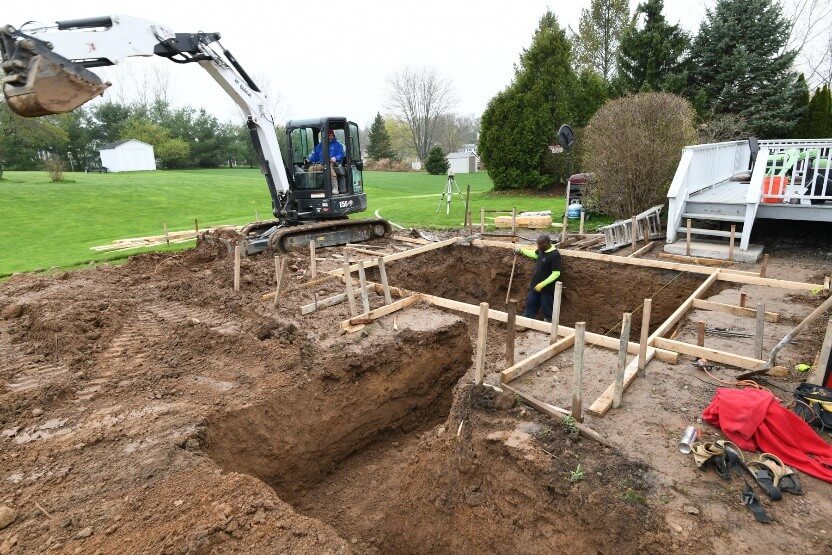
Excavation is one of the faster phases of the build. Once the site is marked and the crew arrives with equipment, digging out the pool typically takes one to two days. The timeline depends on the size of your pool, how accessible your yard is, and what’s encountered underground. Central New York soil conditions, including rocky terrain in some areas, can occasionally slow things down.

Steel and Plumbing

After excavation, the steel rebar framework goes in. This is the structural skeleton that gives your Gunite shell its shape and strength. Plumbing lines are run at the same time, including return and suction lines, connections for any water features, and the equipment pad hookups. Plan for one to two weeks for this phase depending on the size and complexity of the build.

Gunite Application and Curing

The Gunite is sprayed onto the steel framework by a specialized crew in a single session. Once the shell is applied, the curing process begins. This takes approximately 28 days and involves wetting down the shell regularly to support proper curing. This stretch is often the longest single waiting period in the entire build, and it genuinely cannot be rushed. Skipping or shortening the cure time compromises the integrity of the shell in ways that can cause serious problems down the road.

Tile and Coping

Once the shell has fully cured, the finish work begins. Waterline tile is set, coping goes in around the perimeter. Depending on the scope and the materials selected, this phase typically takes one to two weeks.

Interior Finish and Startup

The final step before filling is the interior surface application, whether plaster, quartz, or pebble aggregate. The pool is filled with water immediately after the finish is applied, and the startup period begins. Water chemistry is carefully managed during this phase to protect the new surface as it cures. Your contractor will walk you through what your pool needs during this window and what to watch for.

Planning Around Syracuse Seasons

Syracuse winters arrive early and hit hard, which makes construction timing more important here than in many other markets. Most local builders aim to start Gunite projects in spring or early summer to ensure there’s enough warm weather to complete the build, including the curing phase, before temperatures drop. If you’re thinking about a pool for next season, the time to start the conversation is now, well before the spring rush.

Precision Pool and Spa builds custom Gunite pools in the Syracuse area. Reach out today to start planning your project and get on our build schedule.

Categories
Blog

Why Balancing Chemicals Matters (And How The Right Service Plan Makes it Easier)

Pool chemistry isn’t the most glamorous part of owning a pool. But it might be the most important. Get it right consistently and your pool stays clear, comfortable, and easy to manage all season long. Let it slide and you’re dealing with cloudy water, equipment damage, and repair bills that could have been avoided. For Syracuse pool owners working with a season that’s already on the shorter side, keeping your chemistry dialed in from opening day to closing is what makes every week count.

It’s Not Just About Chlorine

When most people think about pool chemistry, chlorine is the first thing that comes to mind. And yes, chlorine matters. But it’s only one piece of a larger picture. Truly balanced water requires getting several factors right at the same time.

pH is the measure of how acidic or basic your water is, and it affects nearly everything else. Water with low pH is corrosive. It irritates eyes and skin, eats through equipment seals and metal components, and degrades your pool’s interior surface over time. High pH is the opposite problem. It makes chlorine significantly less effective, meaning you can be spending money on chemicals that aren’t actually sanitizing your water.

Total alkalinity acts as a buffer for pH, helping it stay stable rather than swinging up and down with every change in temperature or rainfall. Calcium hardness determines whether your water is aggressive or scaling. Too low and the water pulls minerals from your surfaces, causing etching and pitting. Too high and you get scale buildup that clouds the water and clogs equipment.

All of these factors interact with each other and getting them into the right range together is what balanced water actually means.

What Happens When Chemistry Gets Away From You

The consequences of unbalanced water aren’t just cosmetic. Corrosive water damages pump seals, corrodes metal fittings, and shortens the life of your heater. Scale buildup reduces filter efficiency and restricts water flow through your plumbing. Algae, which gains a foothold quickly when sanitizer levels drop or pH runs high, can take days of aggressive treatment to eliminate once it’s established.

Every one of these outcomes costs money that consistent chemistry management would have prevented.

Why Syracuse Conditions Add Complexity

The Syracuse area presents some specific challenges when it comes to water chemistry. Spring openings often involve cold water, heavy debris loads, and chemistry that’s been sitting untouched all winter. Summer brings heat and heavy use that accelerates chemical consumption faster than many homeowners expect. And the region’s rainfall patterns mean that a few heavy storms in a row can dilute your chemistry significantly in a short period of time.

Managing chemistry through all of that requires consistent attention, not just an occasional check when something looks off.

How a Service Plan Takes the Pressure Off

This is where professional pool service makes a real difference. Rather than testing your own water, making your best guess at chemical adjustments, and hoping for the best, a regular service plan puts a trained technician on your pool on a consistent schedule. Chemistry stays in range. Problems get caught early. And you’re not spending your limited Syracuse swim season troubleshooting water that should have been right all along.

Precision Pool and Spa offers service plans built around what Syracuse pools actually need, from opening through closing. Reach out today to find out what consistent professional care can do for your pool this season.

Categories
Pool Repairs

Signs It’s Time to Replace Your Pool Equipment (currently not offering media replacement at this time)

Pool equipment doesn’t last forever. Pumps, filters, heaters, and automation systems all have a lifespan, and at some point, the question shifts from how to fix something to whether it’s worth fixing at all. Knowing how to make that call saves you money, prevents mid-season breakdowns, and helps you get the most out of your pool during Syracuse’s already-short swim season.

Here’s how to think through the repair vs. replace decision for each major piece of equipment.

Pool Pumps

Your pump is the engine of your entire pool system. When it’s working properly you barely notice it. When it isn’t, everything else suffers.

Signs your pump needs attention include unusual noises like grinding or screeching, losing prime frequently, visible leaking around the housing, or reduced water flow that’s affecting circulation and filtration. Some of these issues, worn seals, a clogged impeller, a failing capacitor, are straightforward repairs. But if your pump is 8 to 10 years old and breaking down repeatedly, replacement is almost always the smarter move.

Modern variable-speed pumps are dramatically more energy efficient than older single-speed models. The energy savings alone often justify the cost of replacement within a season or two, making it an upgrade that pays for itself.

Filters

A filter that’s been properly maintained should give you many years of reliable service. But when your water stays cloudy despite balanced chemistry, or your pressure gauge reads consistently outside the normal range, your filter may be past its prime.
Sand filters need fresh media every 5 to 7 years. Cartridge filters need regular cartridge replacements. If the tank itself is cracked, or the internal components are failing, a new unit is the right call. Filter repairs on an old tank rarely make financial sense when a replacement brings better performance and a fresh warranty.

Heaters

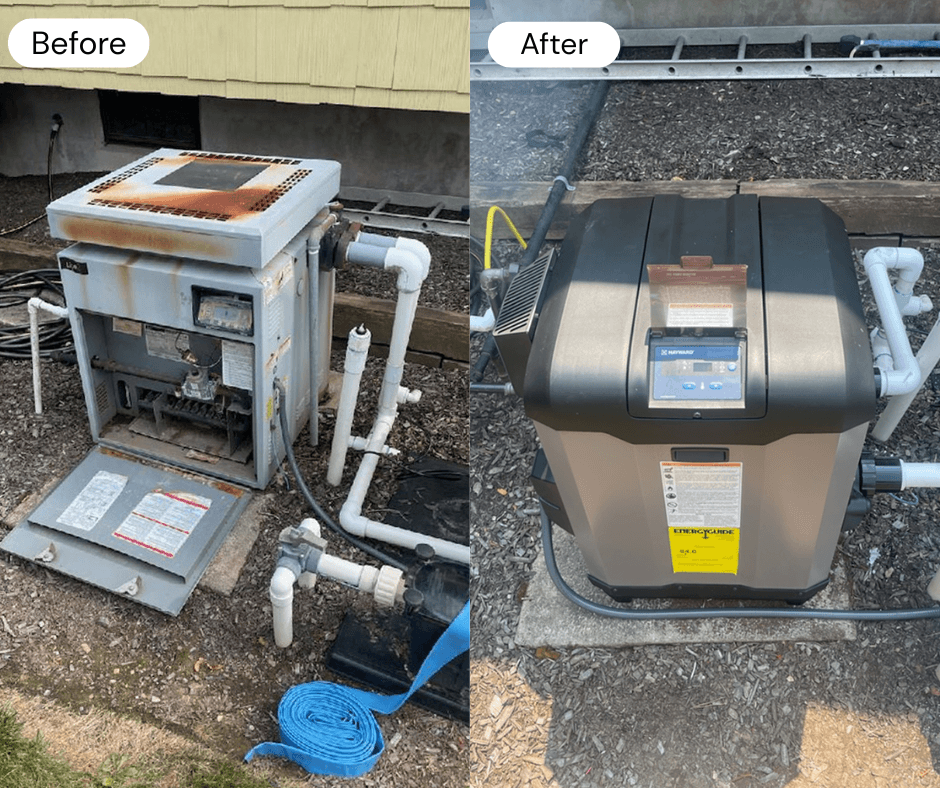
Heaters tend to have a shorter lifespan than other pool equipment, typically in the range of 7 to 12 years depending on use and how well the water chemistry has been maintained. Corrosive water is hard on heat exchangers, and once corrosion sets in, repairs become a recurring cost rather than a one-time fix.

If your heater is throwing error codes repeatedly, struggling to reach set temperature, or requiring frequent service visits, the math usually favors replacement. A new high-efficiency unit costs less to operate and is far less likely to leave you without heat on a cool Syracuse evening when you want to extend your swim season.

Automation and Lighting

Older control systems that are glitchy, unresponsive, or no longer supported by the manufacturer are worth upgrading. Modern automation lets you manage your pool remotely, set schedules, and monitor your system in ways that older panels simply can’t match. The convenience factor is real, and so is the reliability improvement.

LED lighting upgrades are one of the more affordable equipment improvements you can make, with meaningful reductions in energy use and a noticeably better look in and around the water.

The 50% Rule

A useful general guideline: if a repair costs more than half of what a replacement would cost, and the equipment is already several years old, replacement is almost always the better investment. You’re not just paying for the fix. You’re paying to extend the life of something that’s already on its way out.

Precision Pool and Spa helps Syracuse pool owners make these calls with confidence. If your equipment is giving you trouble and you’re not sure whether to repair or replace, reach out and we’ll give you an honest assessment.