Categories
Blog News Pool Maintenance

Storm Prep for Your Pool: Answers for Syracuse Homeowners

Central New York weather keeps pool owners on their toes. A strong line of thunderstorms can bring inches of rain and damaging wind in a single evening, and your pool is a significant investment worth protecting. These are the questions the Precision Pool & Spa team hears most often when a storm is in the forecast, along with our recommendations.

Should I lower the water in my pool before a storm?

Only if it’s already high. When the water is at the top of the tile line or the coping, bringing it down a few inches leaves room for rainfall and helps keep debris from washing in as the pool overflows. If your level is normal, you can leave it alone.

Would it be safer to drain the pool completely?

No, and this is one of the most damaging mistakes a pool owner can make. The water in your pool provides the weight that holds the structure in place. When the ground is saturated after heavy rain, an empty pool can be damaged by the pressure of groundwater beneath it. A few inches is the most you should ever remove.

What should I do with my patio furniture and pool accessories?

Store them. Lounge chairs, umbrellas, cushions, floats, planters and toys can all be picked up by strong wind. Moving them into a garage or pool house protects the pieces themselves and keeps them from ending up in the water or striking your equipment, fencing or home.

Do I need to adjust my chemicals ahead of time?

It helps. Heavy rain and the leaves and dirt that come with it use up sanitizer quickly. Testing and balancing your water before the storm gives it the best chance of staying clear and shortens the recovery afterward.

Should I close my automatic cover?

We recommend leaving it open during significant rain and wind whenever possible. Most homeowners expect the opposite, but a closed cover has to bear the weight of rainwater, debris and any limbs that fall on it. That stress can damage the fabric, tracks, ropes and pulleys. Cleaning the pool after a storm is generally much easier and less expensive than repairing or replacing an automatic cover system.

Is there anything I should do during the storm?

Stay indoors and let it pass. Please don’t try to skim the pool, pull out debris or check on your equipment while the weather is active. Lightning, high wind and wet electrical equipment are a dangerous combination. It’s also worth knowing where your pool equipment breaker is before the storm arrives, in case you need to shut the power off afterward.

What’s the first thing to check when the storm is over?

Your equipment pad. Before turning the system on, look for flooding or standing water around the pump, filter and heater. If you find any, shut off power to the pool equipment and contact us once it’s safe. If the system is running and you hear something unusually loud, or it just doesn’t seem right, turn it off and call us so a technician can take a look.

How do I get my pool clean and clear again?

Skim leaves and branches from the surface and empty the skimmer and pump baskets before running the system. Then test the water. Rain and runoff will have shifted your pH, alkalinity and sanitizer, so plan to rebalance and shock the pool. Large debris, or anything you’d rather not handle, can be left to our team.

Can Precision take care of the cleanup for me?

Yes. Our Syracuse team offers post-storm service that includes debris removal, water balancing, filter cleanings and a full check of your equipment, so your pool is back to its best with no effort on your part.

Questions After a Storm? Call Precision Pool & Spa

If you have concerns once the weather clears, our team is here to help. Contact Precision Pool & Spa to schedule a post-storm cleanup or service visit in the Syracuse area.
Categories
Blog News Pool Maintenance

Getting Your Rochester Pool Ready for Winter: What You Need To Know About Fall Closings & Maintenance

If you’ve spent a winter in Rochester, you know we don’t get a gentle transition into cold weather. It’s time to start thinking about closing your pool before the first real freeze hits, and doing it right makes all the difference come spring.

Why a Proper Closing Matters Here

Rochester winters are long and unforgiving, and a pool that isn’t closed correctly pays for it. Water left in pipes, pumps, and filters freezes and expands as temperatures drop, and that expansion can crack equipment that’s expensive to replace. A proper closing protects:

  • Your pump, filter, and heater from freeze damage
  • Pool surfaces and liners from staining over the winter
  • Water chemistry, so spring opening isn’t a fight with algae
  • Your cover, fitted and secured to hold up through lake effect snow

How Precision Pool & Spa Closes Your Pool

Our technicians take care of every step so nothing gets overlooked:

  • Skim, brush and vacuum if applicable
  • Lower water levels as required
  • Winterize and plug all plumbing lines
  • Removing handrails
  • Shock pool with granular chlorine and algaecide
  • Raise safety cover anchors and install safety cover (if anchors are seized, further service may be necessary)
  • Remove UV if applicable to be stored indoors

*Your pool must be properly maintained up to the date of pool closing. Please make sure your side of your autofill has been winterized prior to the scheduled pool closing if applicable to prevent freeze damage. Please do not turn off your filter system prior to our technician’s arrival.

Handle Repairs Before Winter Takes Over

Fall is your last real chance to deal with anything that came up over the summer. A pump running rough, a heater that hasn’t kept up, or a leak you’ve been putting off are all easier and cheaper to fix now than after months of freezing and thawing. We can often bundle a service visit with your closing appointment.

When to Schedule Your Closing

Timing matters more in Rochester than most places. Close too early and you lose usable pool days. Wait too long and an early freeze could catch your pool unprepared. Once nighttime temperatures start settling into the 50s, it’s time to get on our schedule. Fall books up fast around here, so calling early means more flexibility.

While You Wait

If your closing date is still a few weeks out, keep skimming leaves and debris so nothing sinks and stains the pool floor, and keep testing your chemical levels as cooler weather and lighter use throw things off balance.

Let’s Get Your Pool Winter Ready

Precision Pool & Spa is ready to handle your fall closing and any service needs so your pool is protected through everything Rochester winters bring.

Contact Precision Pool & Spa today to schedule your fall closing and service appointment.

Categories
News Pool Maintenance

Dry Ice in Pools: Recipe for Problems

Why Not to Use Dry Ice in the Pool

We’ve all seen movies or tv shows where people use dry ice to create a spooky white fog that creeps along the ground. Perfect for Halloween, right? You might be thinking that for your Halloween patio party, instead of a smallish bucket of water, why not dump dry ice in the swimming pool and make massive amounts of thick ground fog to really creep up your event?

That may sound cool (and smart), but it’s actually a really bad idea that will disturb your pool water chemistry and possibly even damage the pool itself — not to mention the health risks to yourself, family, and friends.

What is Dry Ice?

Dry ice is solid carbon dioxide — carbon dioxide gas that has been pressurized and cooled at -109 degrees Fahrenheit (-78 degrees Celsius) to form a solid. Because carbon dioxide (CO2)is a gas at room temperature, it doesn’t melt like “wet ice” but instead reverts directly back into gas and skips the liquid phase (called sublimation in scientific terms). Since there’s no puddles or wet residue, it’s called “dry” ice. Its main use is as a cooling agent for preserving and shipping frozen foods and medicines. Of course, it’s also used in fog machines at theaters (and haunted houses) for dramatic effects.


Dry Ice in Warm Water

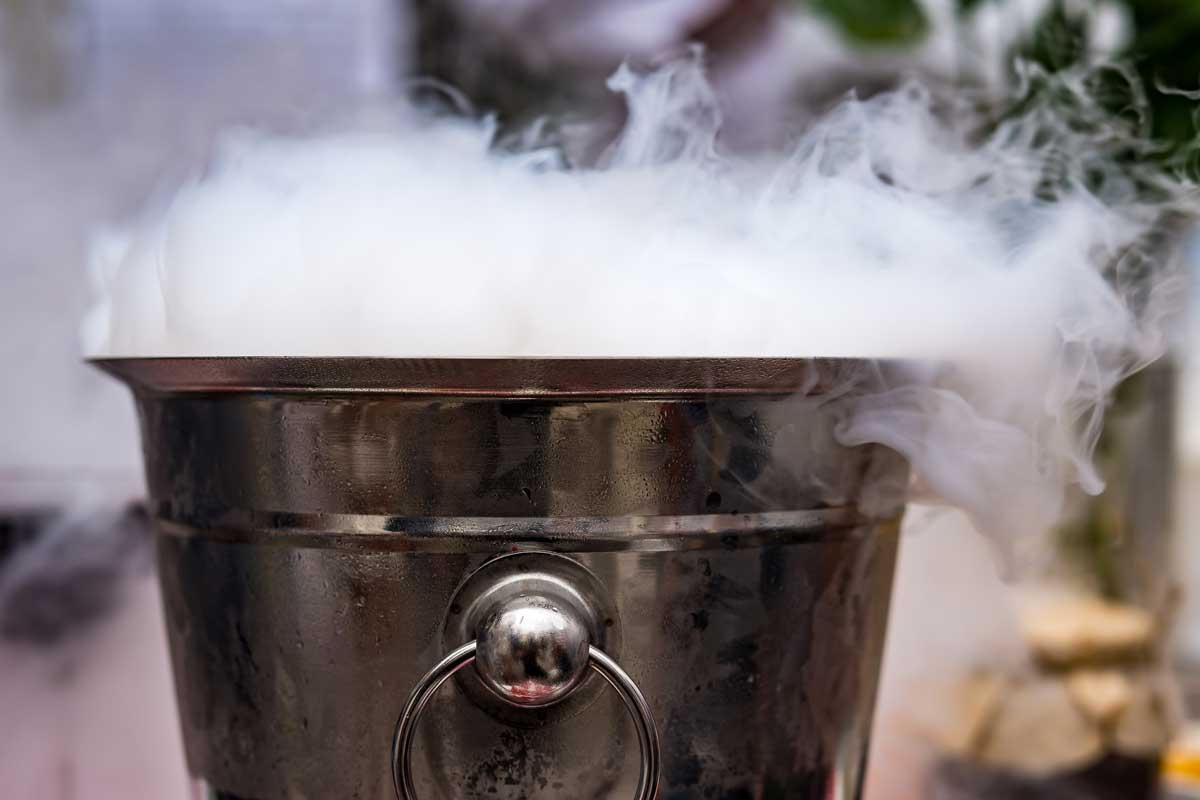
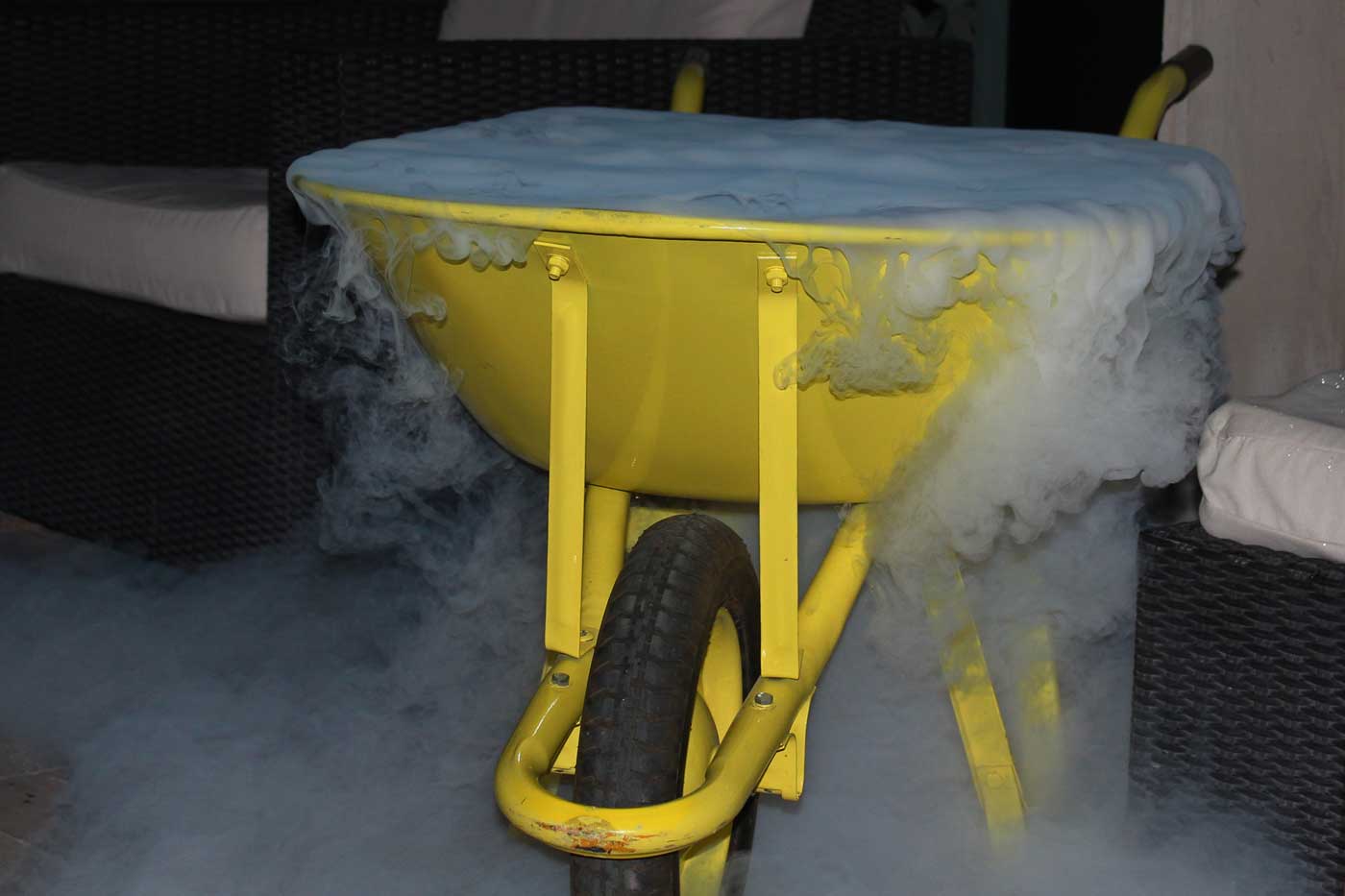
Putting dry ice into warm water causes thick, white fog to form and hang on top of the water and then pour over the sides of the container. It also causes the water to carbonate, or bubble, like a mad witches’ brew.

According to Continental Carbonic Products, Inc., a leading dry ice manufacturer and distributer in the US, 1 pound of dry ice will create 2-3 minutes of fog effect. The hotter the water the more fog, but the quicker the dissipation of the ice. 

Obviously, those numbers are for a relatively small container of water and only one pound of dry ice. To turn your swimming pool into a fog machine for any significant length of time, you’re talking hundreds of pounds of dry ice. 

Health Hazards of Dry Ice

According to the New York State Department of Health, dry ice is hazardous for people both externally and internally. Because it’s so cold, it will burn skin similar to frostbite and should always be handled with gloves, and, if chipping to cutting dry ice, goggles or a face shield should be worn as well. Some people put dry ice in Halloween drinks to give that spooky effect — don’t drink it until the ice is gone or else you could get cryogenic burns down your throat!

Also, since dry ice is made from carbon dioxide, which is toxic, breathing in the gas can cause suffocation. Putting dry ice in your pool causes the mist to hang right above the water where a swimmer’s head is, leading to possible unconsciousness and asphyxia. Using dry ice in an indoor pool is especially dangerous because the gas will fill the enclosed space.

Too Much Carbon Dioxide in Pools

Maintaining the right pH level and alkalinity level is essential for a healthy swimming pool. When you fill your pool with dry ice, the added CO2 disrupts the water’s chemical balance. Specifically, it raises the acidity and lowers the pH levels. This has multiple negative effects on your pool and on the people who enjoy it:

  1. Irritated skin. High acidity and low pH dries out your skin and eyes, leading to itchiness and irritation.
  2. Pool surface damage. Increased acid in the water damages pool surfaces and liners, causing wear and tear to occur quicker than if your pH is well-balanced.
  3. System corrosion. Acidic water also corrodes pool filtration systems, whether metal or plastic, your pipes, filters, screws, etc., will corrode and need replacement. Any rust buildup or plastic disintegration will also contaminate and possibly discolor the water.
  4. Higher expense. To return your pool to the proper chemical balance, you will have to add more chemicals to even it out. This, plus any repair or replacements of pool parts due to damage, will give your wallet a hit.

Alternatives

Instead of using dry ice this Halloween, consider renting or buying a fog machine or a mist machine. This will ultimately be safer and cheaper, and the fog output will last much longer — hours before you need to refill the machine versus minutes before you have to add more dry ice to warm water.

If you already bought dry ice and must use it, save your pool and instead use barrels, coolers, or buckets for your dry ice/warm water mixture container.

Categories
News Pool Maintenance

Health Benefits of Swimming

Time to Cool Off

At Precision, we love a good swim, and we love to install pools that are safe and fun to swim in. But swimming pools and spas aren’t just good for fun, swimming and spa time are also great for your health! Today, we’re going to detail some health benefits of swimming and some ways you can optimize your swim time for your best life and health.
Health Benefits of Swimming

Health Benefits of Swimming

A Good Workout

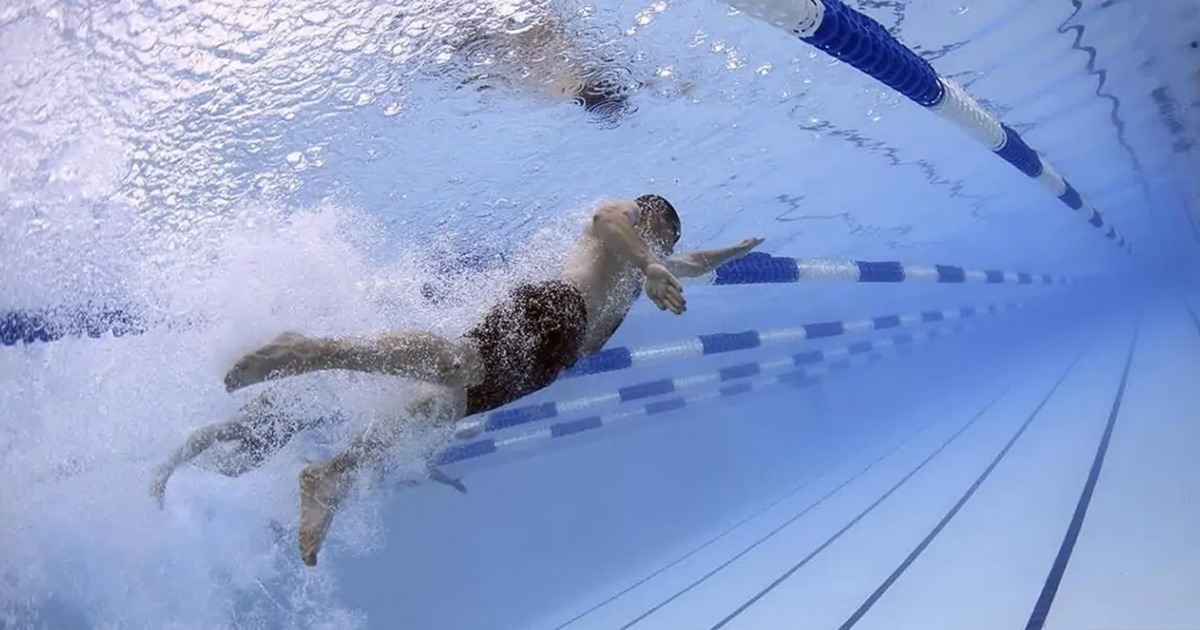
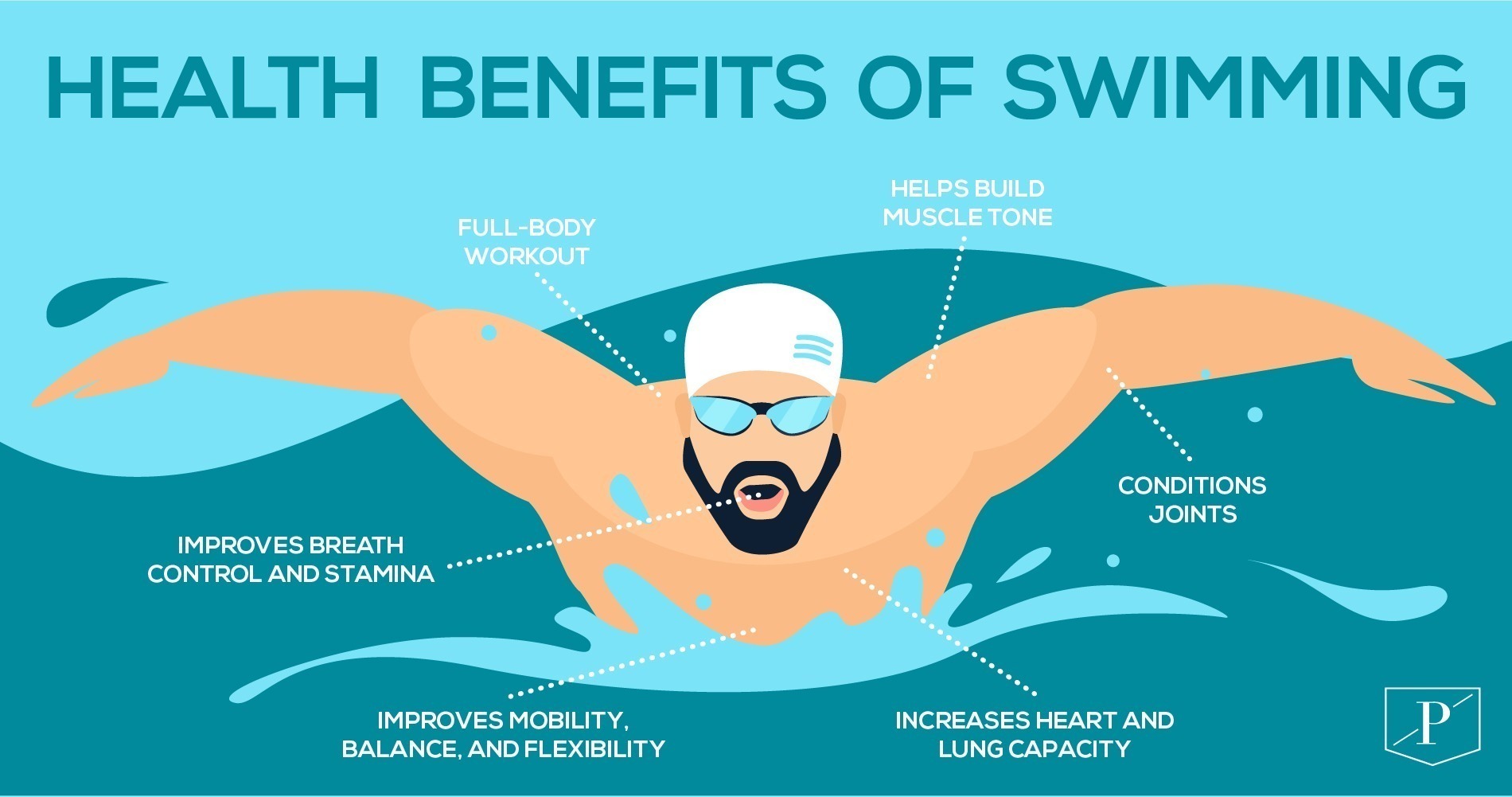
Swimming is a full-body workout that uses the muscles of the legs, back, and arms in repetitive motions against the resistance of the water. Swimming increases heart and lung capacity while improving breath control. This has a positive effect on other workouts as swimming improves stamina.

Better Mobility

Swimming is excellent for a good stretch as well as keeping one’s joints in good condition. This improves other aspects of physical maintenance and fitness, like mobility, balance, and flexibility. We recommend having a stretch before you swim so you don’t overextend yourself.

Swimming is Versatile

Swimming can be many things. You decide if you want a low-impact exercise, an endurance test, or anything in between. You can swim against a current, swim slowly, swim quickly, and use easy or difficult strokes. You can swim in a pool, a lake, the ocean, a dam, and more. Make sure to abide by our safety reminders below.

Lap Pool

Lap Pool Design

Swimming is Accessible

Swimming is accessible to children, the elderly, the injured, the disabled, and more. Water exercises and hydrotherapy are excellent aspects of care and recovery. Spending time in the water helps build or rebuild muscle tone, mobility, and coordination while remaining low-impact and supporting joints. Spas can be built for accessibility to all wishing for relaxation.

Spa Pool Combo

Spa Pool Combo

Swimming is Fun

Swimming is a great way to alleviate stress and have a little fun. Or a lot of fun. Who doesn’t love jumping into cool water on a hot day? Especially in your very own professionally built, professionally installed pool. A spa can be built to your specifications, providing relaxation, pain relief, and greater mental wellbeing.

Swim Safely

Swimming can’t be healthy if it’s dangerous! Stay aware of water safety procedures and follow them at all times.

  • Children should NEVER be left unattended near a swimming pool or water feature. Be careful of pets as well.
  • Be sure to cover your pool when not in use to protect people, animals, and debris from falling in.
  • Monitor chemical levels in your pool to prevent imbalances.
  • Only swim in locations approved for swimming, and never dive anywhere that is not designated safe for diving. Don’t swim anywhere with conditions too difficult for your skill level and pay attention to any signs.

Jump Right In

Connect with us today to discover the joys of having your own swimmer’s paradise. We use only the best building materials and hire only dedicated professionals to build and install pools and spas so our clients can enjoy the health benefits of swimming and the good feelings that go with them.

Categories
New Pool Construction News Pool Maintenance

Fire Pit Designs

Burnin’ For You

What is the opposite of water? Fire! What compliments a professionally built pool and beautifully landscaped yard nicely? A fire pit! That’s right, we dig and install fire pits too. Today, we’re going to look at some fire pit designs to get your imagination going, so let’s turn up the heat.

Why People Get Fire Pits

Modern technology has allowed fire pits to become more diverse than ever. They don’t even have to be pits anymore. But why do people buy fire pits? What do they add to your home?

Canandaigua Lake Spa Fire Pit

Lake View Spa and Fire Pit

  • Fire pits are a beautiful aesthetic feature that lends light and ambiance. A fire pit can have any look you want – rustic, high-tech, luxurious, sculptural, etc.
  • Fire pits create a gathering spot that is not only attractive, but functional. Fire pits keep your guests warm and comfortable. We love a backyard party, and if your fire pit is designed to be used for cooking, a grill master is sure to love it too.
  • Fire pits are an effective bug deterrent. Even if there is little smoke, a fire pit is excellent for keeping mosquitoes, gnats, and other pests away while you enjoy the outdoors.

Types of Fuels for Fire Pits

To talk about the types of fire pits available, we should talk about the types of fuel and the types of setup. The types of fuel include:

  • Wood: Firewood can be purchased at your local hardware store, or, if you have the right experience, tools, and safety measures, you can cut your own. Firewood should be stored in a dry place, away from heat or fire hazards like wiring or electric sockets.
  • Charcoal: If a wood pile isn’t for you, consider charcoal. It too is widely available in different shapes and scents and also has other uses, like grilling.
  • Natural gas: The gas line for a natural gas-burning fire pit can come from the house or a portable tank. Natural gas means little to no smoke and a greater degree of safety, as the burner can simply be switched on and off.
  • Gel fuel: This is made from isopropyl alcohol and is sold in cans that burn for two or three hours apiece. Some can even make crackling sounds to imitate the sounds of wood burning. These cans can be used individually or in multiples and are simple to use.
  • Bioethanol fuel: Also known as biofuel, this is an eco-friendly fuel source made from plant byproducts. These materials come from crops like sugarcane, rice, sorghum, and corn. After the crops are harvested, the remnants are fermented to make a clean-burning fuel.

Types of Fire Pit Designs

Pool and Spa with Fire Pit

Pool and Spa Combo with Fire Pit

When we design your fire pit, one of the things we consider is what materials to use. Metals like stainless steel, copper, and cast iron are good choices. These materials are strong, long-lasting, and don’t carry the same safety concerns as some materials commonly found in DIY projects like cinder blocks, which can explode.

What are some of the options we look at when designing a fire pit that will beautify your home and improve your social and recreational life?

  • Above-ground: An above-ground fire pit can be a brazier, urn, tabletop, bowl, a gravel pit with a stone circle, etc. Most of the time these are portable, removing the need for digging. An above-ground fire pit presents dozens of uses and looks to choose from.
  • Dug-in: These are set into the ground and can be brick, concrete, or stone, cut in regular or irregular shapes. These help contain sparks from fuels like wood, but don’t allow heat to radiate out from the sides as much.
  • Outdoor fireplaces, chimineas, or fire columns: An outdoor fireplace can be built right into a patio with included flue. A chiminea is usually made from terra cotta and is shaped rather like a light bulb. They are front-loading and stand upright on legs. A fire column is a pillar with the flame set on top. They are usually propane-fueled and come in a variety of sizes and shapes. They have an elegant, modern look and are good for those who want to save space or place multiple fire columns around their outdoor space.

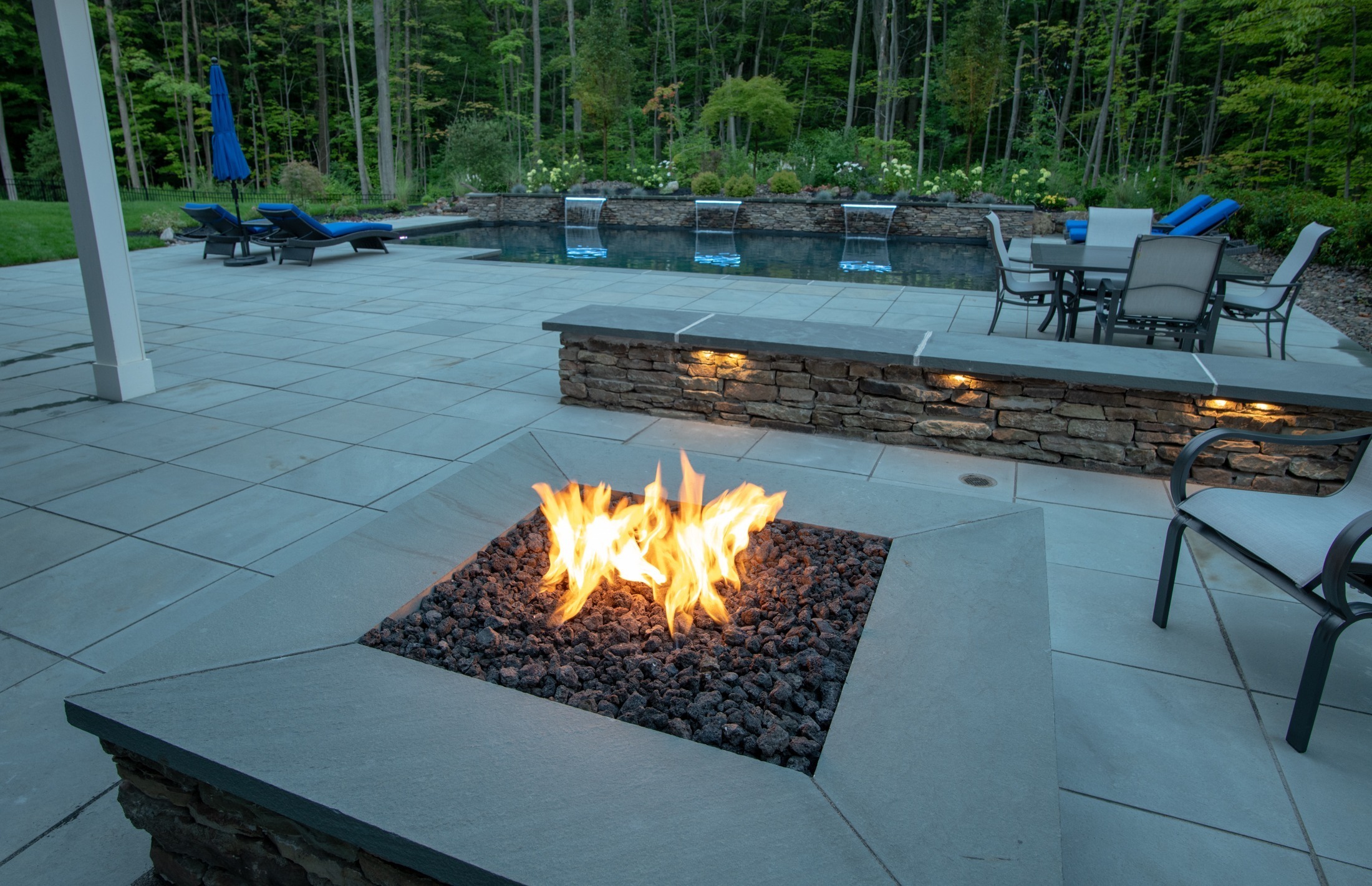
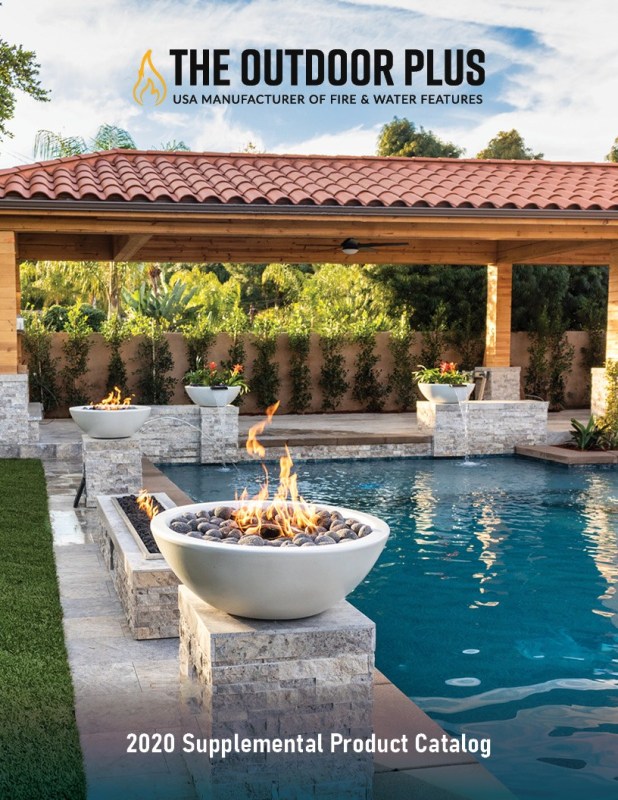
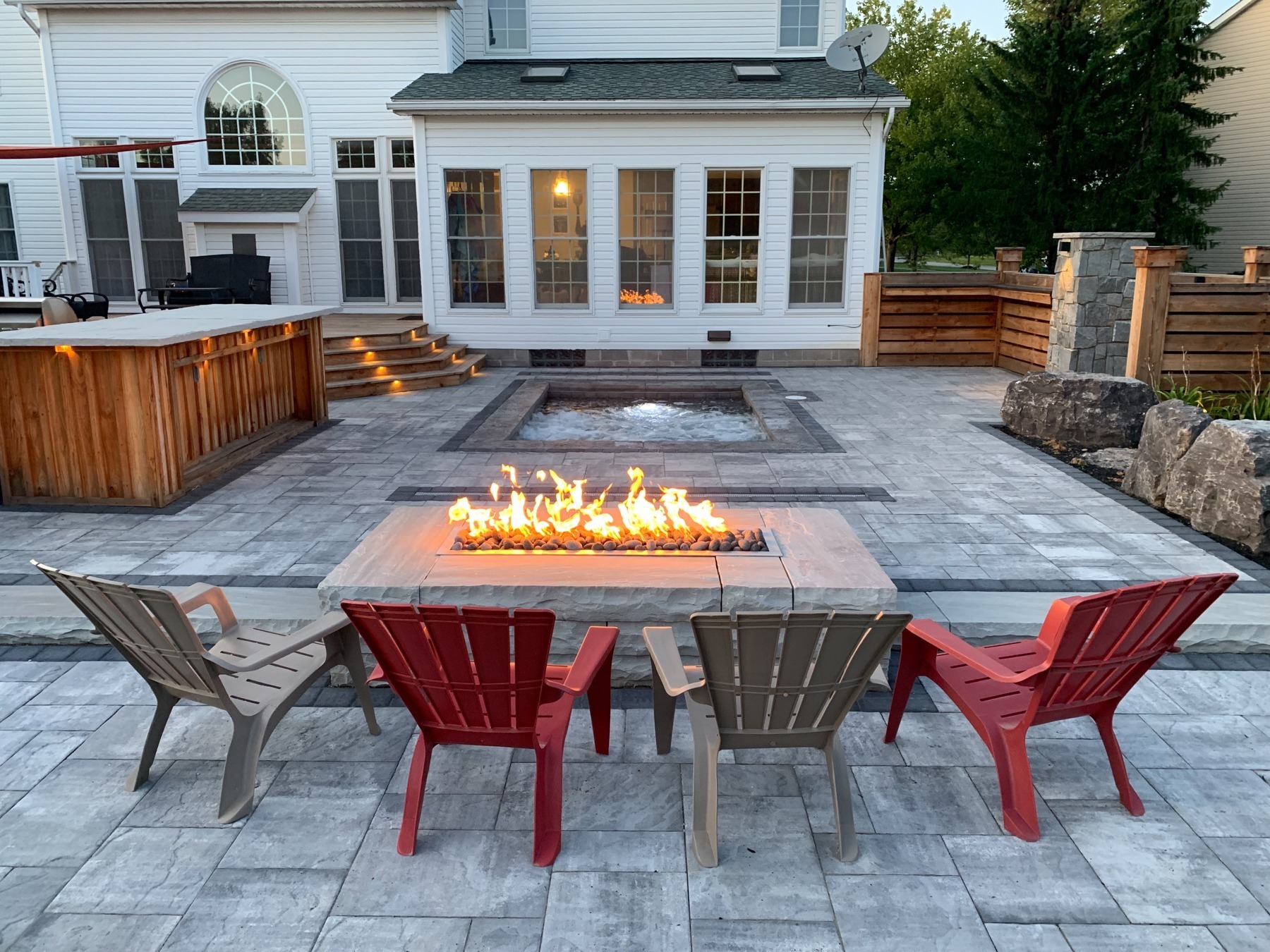
Take a look at some of these fire pit designs from our partner, The Outdoor Plus, for inspiration.

The Outdoor Plus 2019 Catalog

The Outdoor Plus Catalog

The Outdoor Plus 2020 Catalog

The Outdoor Plus New Products Catalog

Fire Pit Safety

The safety of your family and guests is our top priority when designing and building fire pits. Always practice fire safety and do not leave your fire pit unattended, especially if children or animals are present. Our safety considerations include:

  • Using the right building materials: Any material that is porous, like concrete blocks or pea gravel, should not be used for a fire pit. These can trap steam and explode, sending hot rock flying.
  • Choosing the right spot: Fire pits, fireplaces, chimineas, fire columns, and braziers should never be positioned under or near roofs, walls, or trees. Note the building codes for your area to find out the minimum distance required between your fire feature and nearby structures.
  • Choosing the materials for the outer parts of your fire pit, like walls or bowl edges: We don’t want anything that will heat up too much on the outside while still providing warmth.
  • Including the right accessories for your fire pit: If you intend to cook over your fire pit, there should be items like cooking grates, tongs, and skewers that will protect your hands and your food. For wood-burning pits, a metal screen will keep ashes and bits of coals from jumping or being blown out by wind. A cover with the right weight and shape will keep your fire pit dry and contained when not lit.

Let’s Light It Up

Spool Fire Pit

Spool and Fire Pit

A fire pit can transform the entire area around it and unlock endless possibilities for fun, hospitality, and decor. We love designing and building fire pits, from painted chimineas on a Southwestern-styled patio, to dug-in pits with irregular stones that meld with the surrounding earth, to sleek metal pillars with delicate, candle-sized flames. Each is different and shows the personality of those who will enjoy it. Contact us today to explore your options for an elegant, functional, and safe fire feature for your home.

Categories
New Pool Construction News Pool Maintenance

The Best Time to Plan and Build Your Pool

We’re Always Up for a Pool!

We’re going to spoil this article right away by saying that Precision Pool and Spa plans and installs pools all year round. Even in Rochester, NY, we are building gunite pools 12 months out of the year. That being said, our outdoor pool construction is subject to weather and it slows down in February. If we were waiting around to build pools, we would tell you that there are more enjoyable times to build. As it stands, we have a current project list of pools we are constructing and can give you an estimate of when we can start on your pool based on when you commit to the project.

Pool Planning and InstallationThe Best Time to Start Planning

Planning a pool during winter and into early spring is a good idea – we’d say February at the latest – because weather brings us inside more to talk over options. Pools are large, time-consuming projects with lots of variables in play, and taking the time to make decisions before we get to the next phase will help to move the project along that much smoother.

Benefits Before the Thaw

  • When that first thaw kicks in, we are moving twice as fast. By the time the snow is gone completely we are fully engaged in the construction process. Planning during the cold months gives you enough time for everything to go smoothly so we can move quicker to make it happen.
  • You’ll get a better place in builders’ schedules during the spring, if we already had the project underway going into the cold season.
  • By planning during early winter we can make that pool happen the upcoming season.
  • Mud is worse than snow.

The Best Season for Installing Your Pool

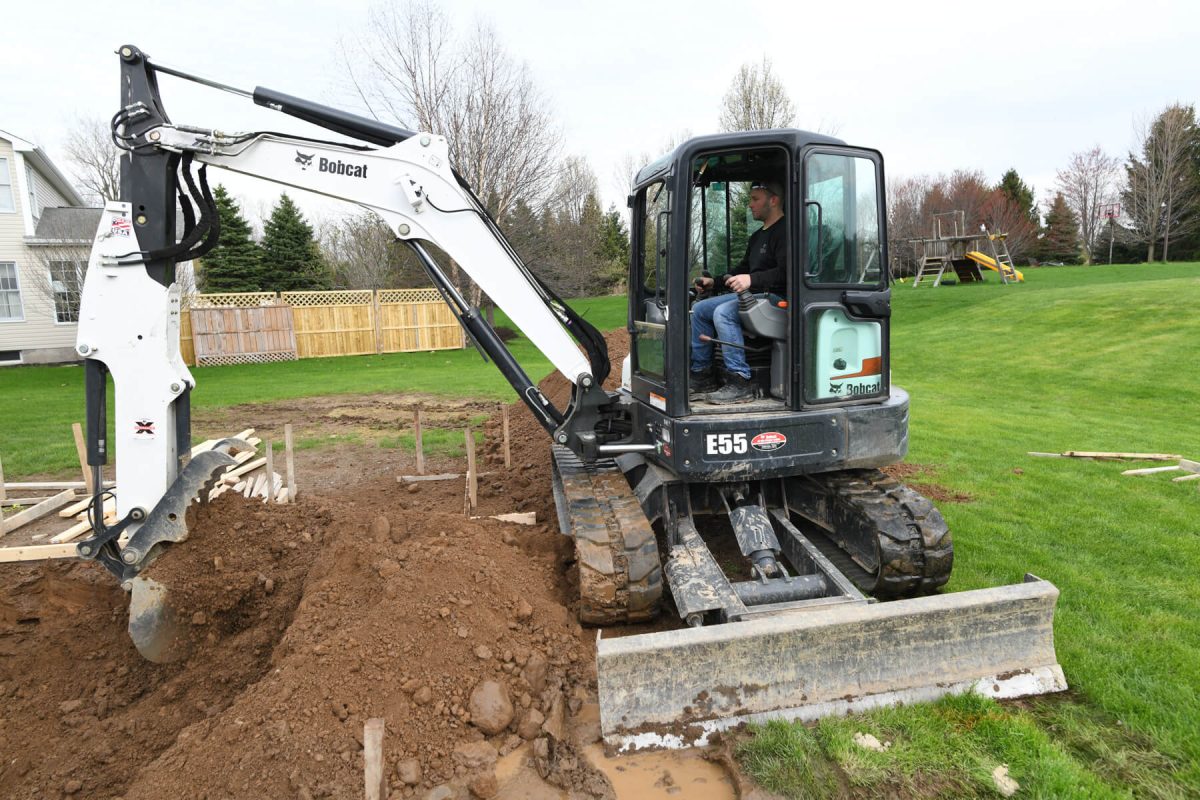
Just for a reality check, depending on the scope of your project, the construction of your pool will probably take multiple seasons. If we have a wet spring, it makes it difficult to get heavy equipment in place to dig, so many times we will get started while the ground is frozen. If you ask us when our favorite time is to construct pools, we love working in the fall. Autumn conditions make it more enjoyable to do the labor involved with construction. The ground is dry and the air is cooler, making it easier for us to spray concrete all day without filling your pool with sweat.

Autumn Benefits:

  • Everything is better – digging, pouring, and curing.
  • Dry ground is predictable and allows us to move quicker.
  • Wearing a full suit and a mask while in the bottom of a pool, throwing gunite at 3,000 psi is exhausting and the season offers an ounce of relief.

Upstate NY Pool Planning?

If you want your pool to be ready for summer, talk to us the fall before and commit before winter hits. Let us have a solid design and plan ready before spring arrives.

Things to Do First

To help make your project go smoothly, there are some things you can do before you start planning your pool or spa in earnest.

  • We recommend putting serious budget and thought into landscaping and how you want to use your yard, not just the pool. We have worked with many landscaping companies around Rochester and ironically their schedule is more limited by weather than ours.
  • Think about the structures you want. Lighting, plants, steps, ramps, fences, and more all need to be planned for.
  • Collect things you do and do not like and save those images for our discussions. It helps us build a visual for your upcoming design.

Precision for Perfection

The right time to ask us questions about planning and installing a pool is always YESTERDAY. Waiting for an ideal season isn’t an actual thing because the one thing we can’t control is the weather. Knowing what decisions have to be put in motion, we can get to your project sooner, if you let us start planning yesterday.

Categories
New Pool Construction News Pool Maintenance

Maintenance: The Real Cost of a Swimming Pool?

What Does a Swimming Pool *Actually* Cost to Maintain? 

There are costs of maintaining a pool that are easy to forget or overlook. Here we cover some of the materials, time, and costs of maintaining a pool that you might have missed. Of course, your results will vary, but this will give you a general picture. As always, call us up and we’ll work up an accurate quote for you.   

A quick search online and you find estimates place the annual cost of owning a swimming pool at $3,000 to $5,000, some websites place it at anywhere between $4,000 to $12,000 a year, maybe more. The numbers are so inconsistent, we wanted to help define what goes into maintaining a pool annually. 

There are costs associated with opening a pool, closing a pool, insurance, cleaning, repairs, and then some things you can’t predict. If you stay regular with maintenance, it is relatively predicable in the scope of budget. Whether you do the work yourself or have a professional maintain your pool, its important to know where the costs come from. 

Common Swimming Pool Costs 

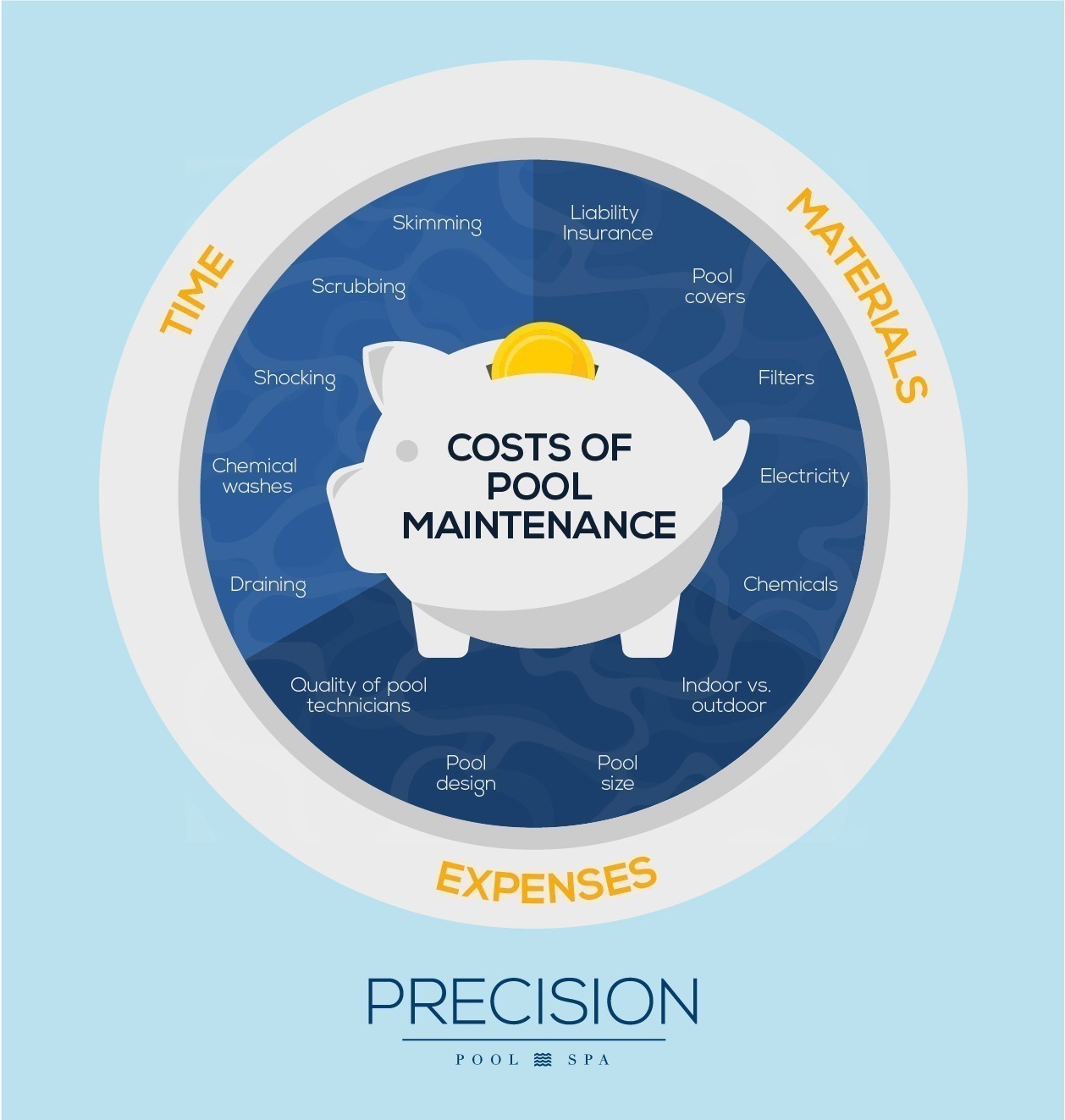
Every pool and its surroundings are different, but there are some consistent factors to consider when planning maintenance costs for a swimming pool. We’ve placed them into three categories: materials, expenses, and time.   

Pool Maintenance CostsMaterials for Maintaining a Pool 

There are lot of physical materials you’ll need to factor in to an estimate for a swimming pool. Some of these are: 

  • Pool covers are a sound investment to protect your pool from weather and outside contaminants, and to protect humans and wildlife from your pool. Every pool we maintain needs to have a safety cover and if properly maintained it will last you many years. 
  • A startup kit. We are bundling a pool net, vacuum brush, and test kit into this category because every pool we build comes with one of everything you need to get started.
  • Filters, whether sand filters, cartridge, or diatomaceous earth filters  
  • Electricity to run items like swimming pool pumps and heaters  
  • Chemicals like algae killers, chlorine and/or bromine, and stain or oil removers, which need to be added at proper intervals. Balance them right, and you won’t need to spend more to correct them. 
  • Liability insurance – it may not be a tangible item, but proper coverage is essential for swimming pool owners to have coverage on their home owners plan. 

Expenses of Maintaining a Pool 

Swimming pool cost varies according to the type of pool, what it’s used for, and frequency of use. Here are some things to take into account when calculating expenses for your swimming pool:   

  • Indoor pools versus outdoor pools: Indoor pools are much easier to maintain as they are not exposed to weather and outdoor debris or even the sun which reduces cleaning and chemicals. 
  • Pool size: Are you getting a small spa or hot tub, a “spool” hybrid, or an Olympic-sized swimming pool with deep end and diving boards?   
  • Pool design: A rectangular tiled pool will be less complex to clean and maintain than an irregularly-shaped lagoon with rocks and vegetation. Add on features like fountains or waterfalls and it changes what we need to maintain.     
  • Quality of your pool technicians: You might pay less for a low-paid, minimally-experienced pool technician, but you can’t be sure they fully understand the construction materials, chemistry, plumbing, and electricity needed to keep your pool clean, beautiful, and above all, safe.   

Time for Pool Maintenance 

Some elements of pool maintenance can be done in minutes, some take time. Some need to be done frequently, some every few months, and some pool maintenance tasks only need to happen once a year. Many you can do yourself; but some need a professional. These are some types of pool maintenance work to include in a time estimate: 

  • Opening & Closing – Annually the pool needs to be opened and prepped for winter properly. 
  • Draining the pool – If you maintain your pool, you might not need to drain it completely for years. Never leave a pool drained in our climate over the winter. If something happens and maintenance work does need to happen, draining the pool takes up a lot of time. 
  • Check the chemicals. This is the shortest most valuable time spent with your pool. Testing the pool chemistry on a regular basis will keep you pool balanced and your wallet happy. 
  • Backwashes are still a thing with sand filters. Taking the time to properly maintain the filter is a weekly task you don’t want to miss. 
  • Cleaning the pool’s surface regularly will keep you from needing to fix stains with harsher chemicals later.
  • Skimming the pool to remove surface debris, which should be done at least weekly. If you are surrounded by trees, this turns into your daily routine. 

Adding It All Up 

We are a full-service pool construction, installation, and maintenance company. Contact us today for a quote specially tailored for your pool. We’ll help you build a maintenance plan for your swimming pool maintenance needs and budget.   

When choosing a company for your swimming pool maintenance, look for a business with a track record of good reviews. Look for people who take pride in their work, who don’t cut corners, and who notice and correct small issues before they can grow.     

Categories
New Pool Construction News Pool Maintenance

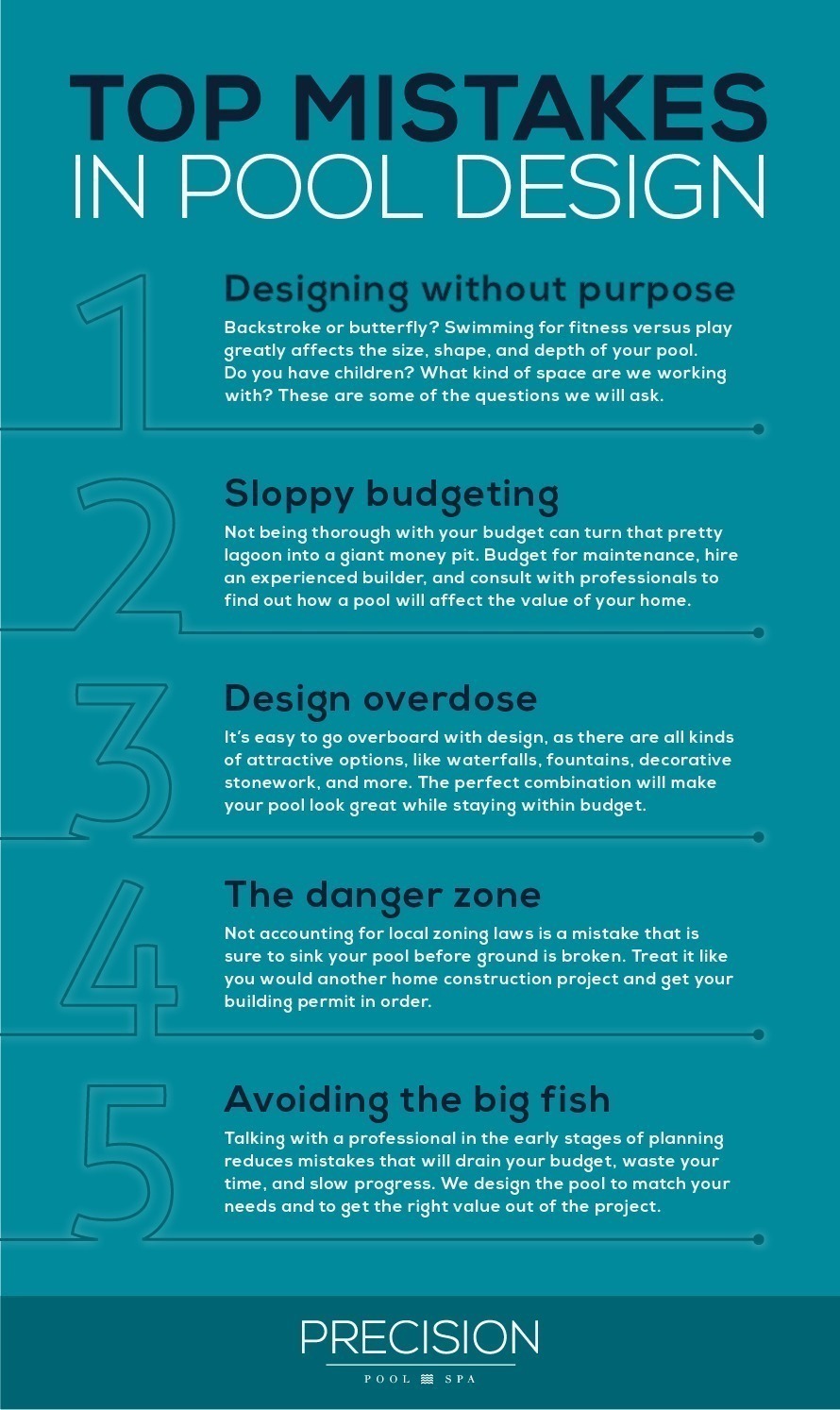
Common Mistakes in Pool Design

Top Mistakes in Pool Design

Pool Design: Jumping Right In

Designing your pool doesn’t need to be a complicated task. You might have an idea of what you want it to look like, but how do you get there? We want you to have a clean, beautiful pool that you can enjoy safely for many years, not one that’ll put you in a place of debt and disappointment. We get to design and guide both homeowners and businesses through the process of matching the pool design to their lifestyle every day.

Backstroke or Butterfly?

When you start planning a pool, there are a lot of things to consider and a lot of boxes to check. Some of the questions we ask are:

  • Do you want to swim laps, splash around, or catch the rays on a float? Swimming for fitness versus play greatly affects the size, shape, and depth of your pool.
  • Do you have children? Safety is our top priority, and we take extra precautions to keep little ones safe while we design a pool appropriate for their use and a pool that grows with them for years to come.
  • What kind of space are we working with? A wide-open, flat yard offers more freedom than a smaller space with trees that will drop debris where hills give us unique design ideas for waterfalls and more.

These are only a few of the factors that we keep in mind. Sometimes knowing what not to do gives us a better idea of what to do. Let’s cover some of the more common mistakes and how to avoid them in pool design.

Sloppy Budgeting

You might think that you’re taking everything into consideration when budgeting to build a pool, but it’s worth engaging a professional to take a look at your project. A well-planned pool can add a lot of value to your property and a lot of enjoyment to your leisure time, but not being thorough with your budget can turn that pretty lagoon into a giant money pit. We suggest:

  • Budget for maintenance. We can help you find the right sanitation system and put the right tools in place to keep your pool pristine in a manageable way.
  • Experience = value. While we can tell you that mistakes cost money and try to give you a guide on how to avoid them, an experienced eye on the project will spot mistakes we can’t cover in any guide.
  • Budget for value. Consult with professionals like your financial advisor and real estate agent to get an idea of how much a pool or spa could affect your financial outlook. Pools can make a property harder to sell, so if you are planning on selling your property, a pool could be a liability.

Design Overdose

Pool design impacts more than just use. Choosing the wrong design can make your pool impossible to maintain as well as increasing cost. It’s easy to go overboard on making your pool beautiful, as there are all kinds of attractive options, like waterfalls, fountains, decorative stonework, tanning ledges, and more. We’ll help you come up with the perfect combination to make your pool or spa look great while staying within budget.

Think about what you’re actually going to use. We bring a very realistic approach to pool design and having a deep end to a pool that nobody really uses any more, can move that financial dial by thousands. Are you planning to socialize poolside? Maybe a free-edge design that facilitates movement would be better than a long rectangle. Do you want your pool to be the defining feature of that space or would you rather have it compliment your surroundings?

Whether you like it sleek and minimal or are set on a adventure paradise, making smart design decisions from the beginning will make you much happier with the end result.

The Danger Zone

Not accounting for local zoning laws is a mistake that is sure to sink your pool before ground is broken. Treat it like you would another home construction project and get your building permit in order. New York building permits must account for environmental factors like the water table and where the sewer lines are. Every New York pool built or altered after December 2006 must include equipment like a state-approved alarm and a secure barrier around the pool to prevent entry, with inspections conducted multiple times throughout construction.

Precision Pool and Spa is well-versed in New York zoning laws for swimming pools and will help you make sure that everything is approved and complies with local regulations.

Swim with the Big Fish

We love seeing our clients’ dreams for their ultimate pool or spa come true, and to make that happen in the most efficient way possible, it helps for us to be involved from the beginning. That way, we can guide design the process as well as the pool to streamline your project from start to finish.

Dave always says, “It’s always about finding the right VALUE to the project.”

Talking with a professional in the early stages of planning your pool or spa reduces mistakes that will drain your budget, waste your time, and slow progress. We want to avoid all of that. Whether we are designing a backyard spool or hotel lodge retreat we design the pool to match your needs and make sure to get the right value out of the project.

Categories
News Pool Maintenance

Ultraviolet Sanitation Systems for Pools and Spas

What is UV Sanitation?

Ultraviolet (UV) sanitation is a method of cleansing water using UV light. UV light kills or neutralizes microorganisms, producing safer water for drinking, washing, and swimming.

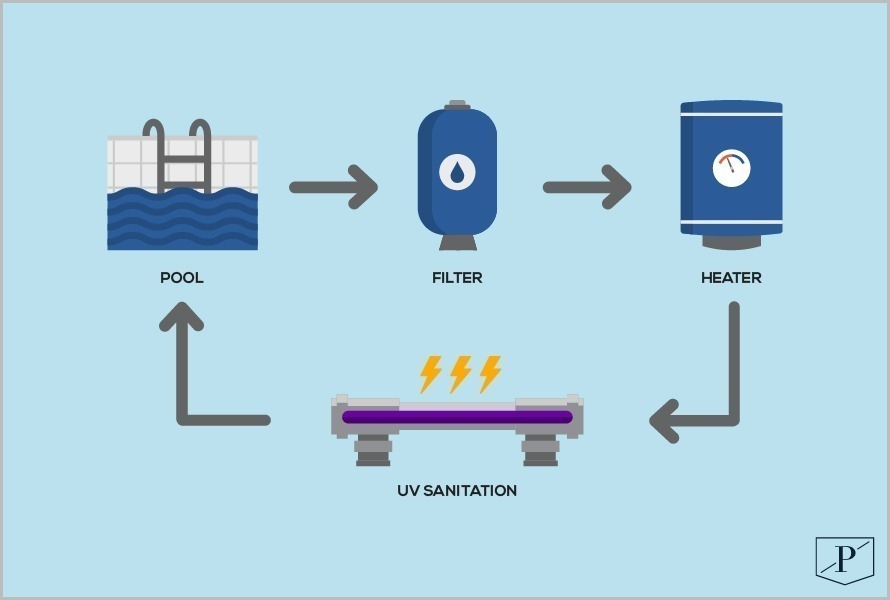
UV Sanitation for Pools and Spas Diagram

How does a UV pool sanitation system work? First, the water goes into the pool’s existing filtration system, then into a graphite compartment where it passes through a beam of UV light. The UV light wipes out microorganisms by attacking cell walls and damaging nucleic acids, effectively ripping apart their DNA. This either kills the organisms or leaves them unable to reproduce or carry out basic cellular activities, keeping us safe from these contaminants. These microorganisms include algae, spores, viruses, and bacteria.

UV vs. Chlorine Sanitation

Using UV light as a water cleanser has been practiced for some time and is regularly used to treat drinking water and wastewater. Today, most new pools and spas today are equipped with a UV sanitation system, but is that the right choice for you?

While most new pools and spas are made with a UV sanitation system, chlorine is still the most common pool sanitizer. Why is that, and what should you choose for your pool? We’re going to look at some pros and cons for UV and chlorine and give you our professional opinion.

Pros & Cons of UV Pool Sanitation

Pros of UV Pool Sanitation Systems

  • Easier to use, requires less monitoring, and needs less maintenance than chlorine cleansing systems
  • Does not cause chemical buildup and will not damage pool materials and structures over time
  • System is enclosed, so swimmers never come into contact with UV rays, and it’s not impacted by weather
  • Produces extremely clean water without any chlorine odor, buildup, or irritation

Cons of UV Pool Sanitation Systems

  • Does not clean the pool itself, only the water that passes through the system – you’ll need to have chemical cleansers on hand to keep your pool or spa’s walls, floors, and other structures clean
  • While we design our pools to recycle the water through the filter system, we can’t guarantee when or if the dirty molecule of water will make it into the system
  • All UV systems are not maintenance-free forever; the UV light source will weaken over time, so you need to make sure to replace it periodically so that bacteria and parasites can’t survive in your pool

Pros & Cons of Chlorine Pool Sanitation

Pros of Chlorine Pool Sanitation Systems

  • Works into the entire pool of water, not just when it passes through a compartment containing a UV ray; this allows chlorine to attack bacteria everywhere in the pool, immediately
  • UV light is excellent for disinfecting pool and spa water, but it does not oxidize. Inanimate substances remain whole and harmful in water if they are not oxidized. Chlorine does this by either adding oxygen molecules or removing electrons from the substance, breaking it down
  • Chlorine systems are easy – the automatic chlorinator systems we install are nothing like the old school chlorine you used to work with
  • Helps keep the pool surfaces and equipment clean, not just the water, and is necessary to keep the pool free of bacteria growth

Cons of Chlorine Pool Sanitation Systems

  • Requires more regular upkeep than UV, as keeping a good chemical balance is key
  • Need more monitoring – chlorine levels must be checked regularly
  • Chlorine itself is caustic – without proper setup and handling it could cause irritation, or even damage to equipment
  • Some parasites, like cryptosporidium, can withstand chlorine

Why you need BOTH UV and Chlorine in your Pool

While the world debates whether one is better than the other, the systems really do complement each other, which is why we recommend both. Using both gives you two different levels of protection that reinforce each other to make sure your pool is as clean as possible. Using UV light means you can use less chlorine while still guarding against contamination at all times and keep your pool structures clean.

There are many UV systems available in the market. We install and recommend the Paramount UV2 system which kills off 99.9% of micro-organisms.

Categories
News Pool Maintenance

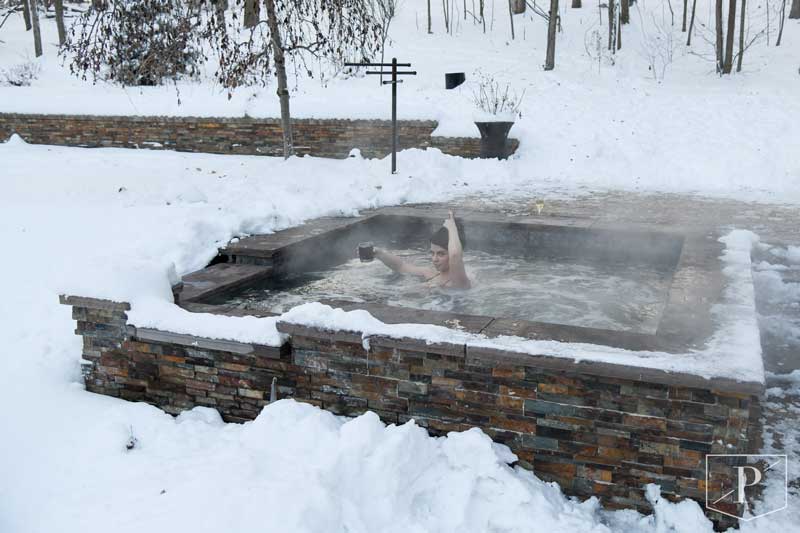
In-ground Spa Winter Guide

There’s something special about owning an in-ground spa and having it available in the winter. That hot water is therapeutic and being able to enjoy it all winter is something that changes the entire approach to the season.

Making sure your in-ground spa or spool is ready for winter enjoyment is an important part of ownership. A few minutes and a few easy steps can ensure your spa is in top condition for years to come. Winter is the time of year when frigid temperatures and freezing pipes can do real damage for owners who are not prepared.

Have a Plan

Waiting for the power to go out in -10 degree weather is not the time to test whether or not you can keep your spa running in an emergency. Make sure you write down the plan, have an emergency contact, and know where all the resources are before you go away. We came up with a few of our top things to look for when making a good plan to maintain your spa all winter.

Check Your Backup Generator

If you have a whole house generator, which we always recommend, make sure it is ready for the season. If your spa was installed after the generator, or if you have specific circuits that receive emergency power, be sure that your electrician has set up the spa as part of the necessary running items.

Above 65 Degrees In-ground Spa Winter Guide Diagram

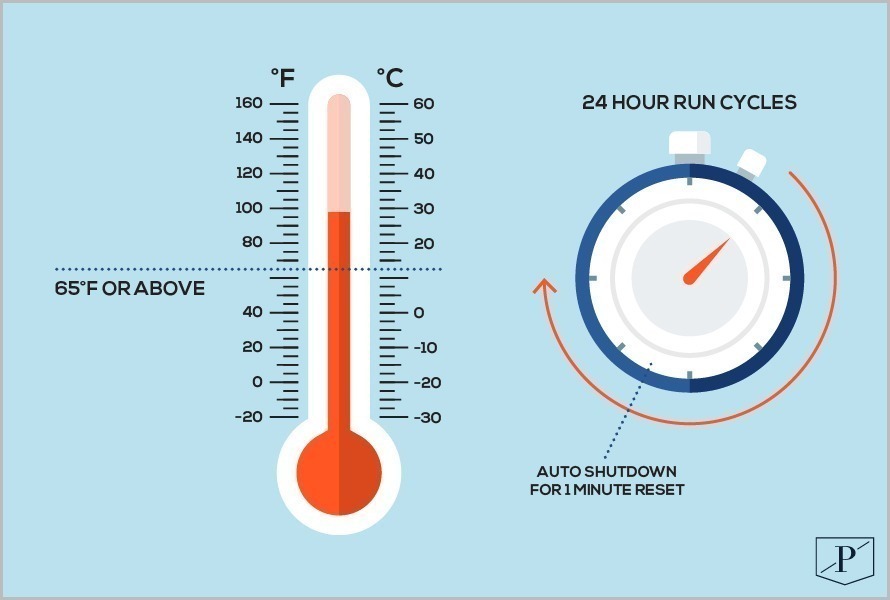
If you are using your spa in the winter, most people keep temperatures over 90 degrees. However, if you plan to lower the spa temperature for a period of time, do not go below 65 degrees. In the case of a real emergency, having the temperature warm enough to be able to react is as important as having an emergency plan.

24 Hour Pump Schedule

Your spa pump should be running continuously for 24 hours, especially when the temperature drops below freezing. We schedule a pump reset and system shutdown only one minute per day. This is where most people get in trouble as they adjust the schedule on days where the temperature is moderate, but forget to reset it back before the freeze. Keep that same schedule all winter.

Check Your Cover

The main direction for heat loss in an in-ground spa is UP. Keep that cover installed when not in use. Be sure to inspect the cover every Spring to make sure it’s ready for the next season. That will give you time to repair or replace anything necessary before the cold season arrives again.

Maintain Water Level

Automatic water fillers are typically turned off in the winter, because they will freeze when not in use. Check to make sure your water level is above the filter line, and that you can fill it up easily when needed.