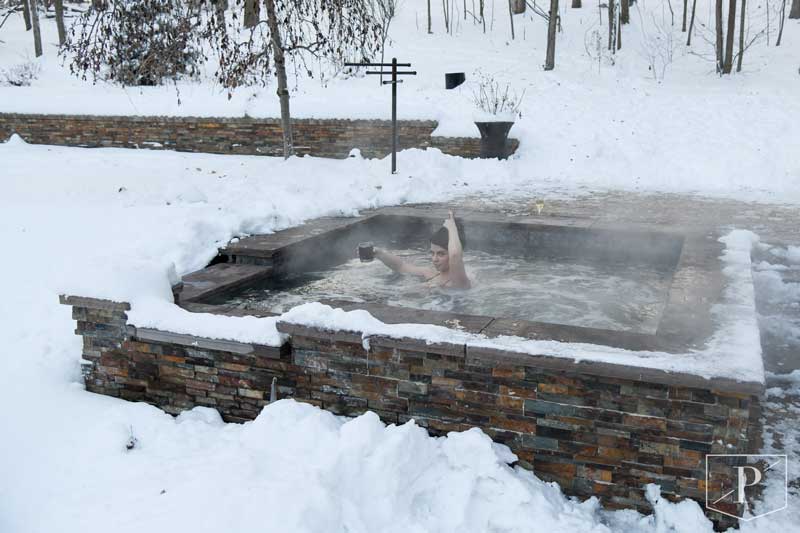
There’s something special about owning an in-ground spa and having it available in the winter. That hot water is therapeutic and being able to enjoy it all winter is something that changes the entire approach to the season.
Making sure your in-ground spa or spool is ready for winter enjoyment is an important part of ownership. A few minutes and a few easy steps can ensure your spa is in top condition for years to come. Winter is the time of year when frigid temperatures and freezing pipes can do real damage for owners who are not prepared.
Have a Plan
Waiting for the power to go out in -10 degree weather is not the time to test whether or not you can keep your spa running in an emergency. Make sure you write down the plan, have an emergency contact, and know where all the resources are before you go away. We came up with a few of our top things to look for when making a good plan to maintain your spa all winter.
Check Your Backup Generator
If you have a whole house generator, which we always recommend, make sure it is ready for the season. If your spa was installed after the generator, or if you have specific circuits that receive emergency power, be sure that your electrician has set up the spa as part of the necessary running items.
Above 65 Degrees
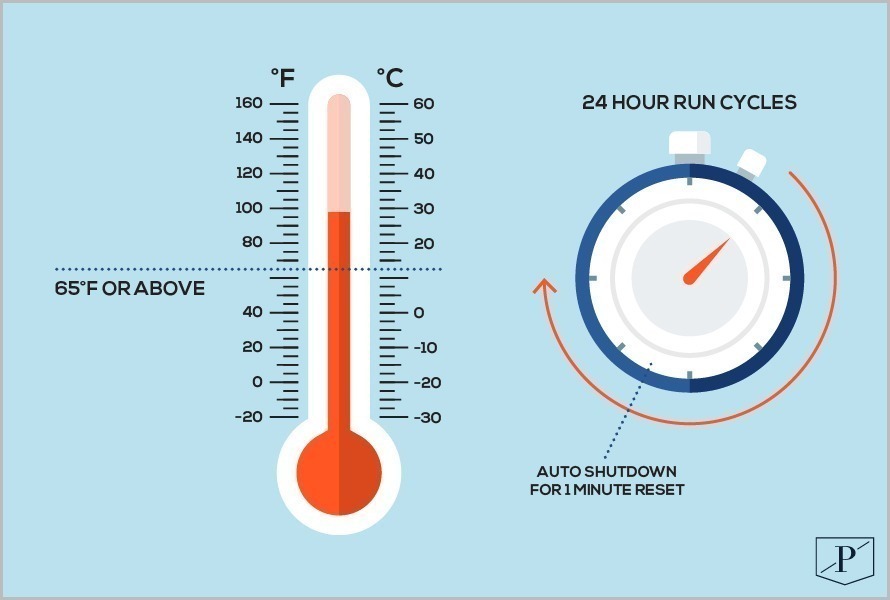
If you are using your spa in the winter, most people keep temperatures over 90 degrees. However, if you plan to lower the spa temperature for a period of time, do not go below 65 degrees. In the case of a real emergency, having the temperature warm enough to be able to react is as important as having an emergency plan.
24 Hour Pump Schedule
Your spa pump should be running continuously for 24 hours, especially when the temperature drops below freezing. We schedule a pump reset and system shutdown only one minute per day. This is where most people get in trouble as they adjust the schedule on days where the temperature is moderate, but forget to reset it back before the freeze. Keep that same schedule all winter.
Check Your Cover
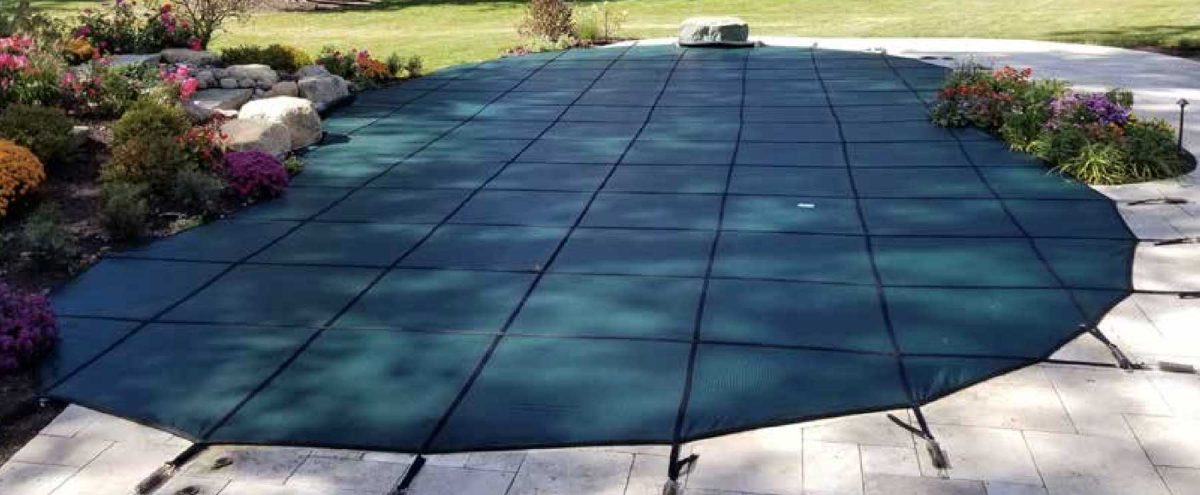
The main direction for heat loss in an in-ground spa is UP. Keep that cover installed when not in use. Be sure to inspect the cover every Spring to make sure it’s ready for the next season. That will give you time to repair or replace anything necessary before the cold season arrives again.
Maintain Water Level
Automatic water fillers are typically turned off in the winter, because they will freeze when not in use. Check to make sure your water level is above the filter line, and that you can fill it up easily when needed.
There are states that do require safety covers on in-ground pools. Currently, it is not a requirement in New York State to have a safety cover on your pool if you have a proper barrier surrounding the pool. While it may not be a state requirement for winter closings, WE REQUIRE that you have a proper safety cover in place, despite what NY State law says. A proper safety cover is a small investment that will prevent children, pets and other items from entering the pool from inside the barrier.
What are the Laws?
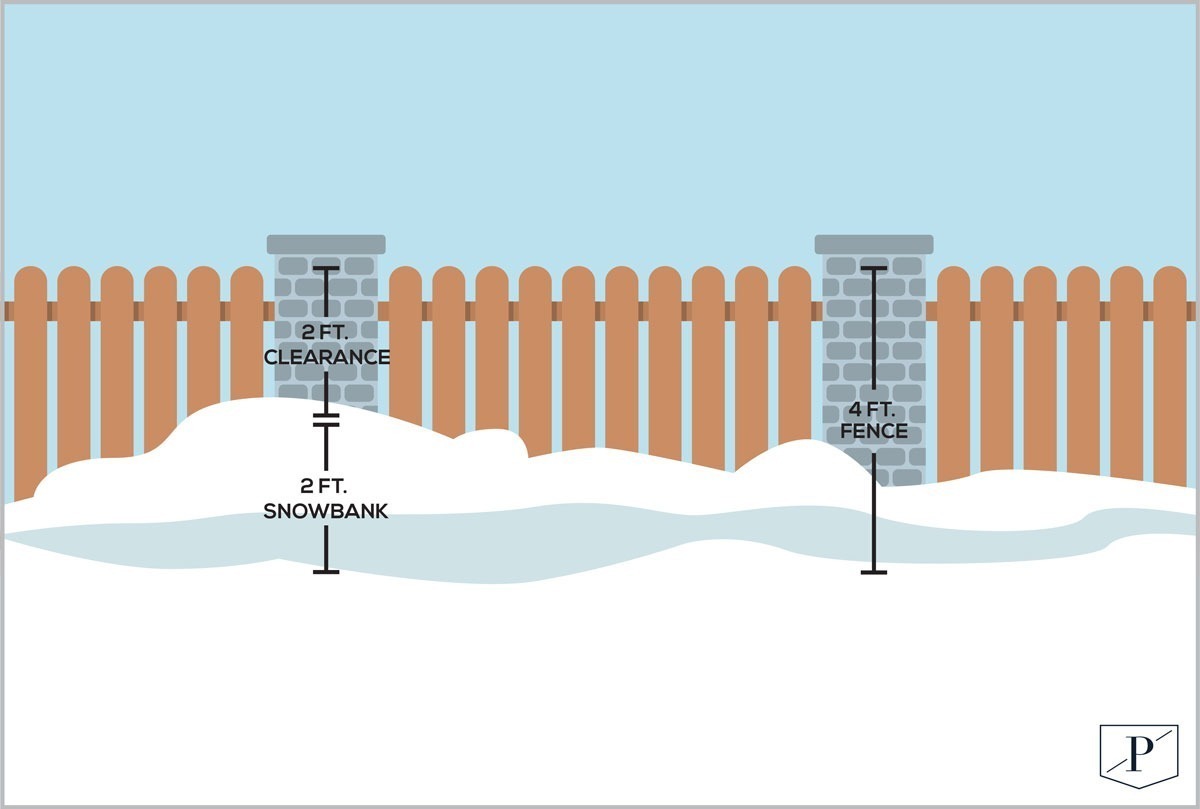
In New York, any pool needs to be restricted access by the use of barriers such as fences or walls preventing access with a minimum of 4 feet of clearance. Here is a quick link to the New York State regulations if you are interested in the details.
Yes, but we don’t need a law to make it our policy to do the right thing.
A “proper barrier” is a fence that surrounds the pool from outside access. For summer months this works for keeping kids and pets out of the entire pool area. In the winter months however, this barrier isn’t enough. The barrier law requirements are that you have a 4 foot tall wall restricting access to the entire area of the pool. When it snows in upstate New York, the ground level changes, and that 4 foot fence is no longer 4 feet. We have fond memories building snow mounds in the winter, sledding and watching the ground disappear.
When we close our pools for the winter, the most dangerous times for access to happen are during the winter months when the fence barrier can’t prevent access.
What do you need?
Protect your family, your pool and others by getting a pool safety cover over the winter. If we close your in-ground pool, we REQUIRE that you have a proper safety cover. Inspect the safety cover annually when opening the pool in the spring. We inspect the covers when we open the pools because it allows us to get it properly fitted and repaired if something was not working properly before the next season.
How do they work?
There is a standard for safety that all safety covers must comply with ASTM F 1346-91. This ensures that the cover can hold certain weight standards on top of them and that they will not fail. Unlike old tarp covers, safety covers are tamper-proof, in that they prevent entry without an installation rod. There are tensioning springs that connect into mounting points setup in the concrete or patio around your pool. Once all connected, they make a strong barrier that makes them safe. We measure each pool at work with GLI Products to design your custom safety cover, so it first perfect.
Will you close our pool, knowing we don’t have a proper cover?
NO! This is a bit of a deal breaker for us. We are not offended if you choose to close your own pool or hire others that don’t use safety covers
Are there Summer Safety Covers?
There are options for people who want the benefit of a safety cover in the summer. We setup and Install automatic pool covers from CoverSafe. Check out this pool that has a safety cover and see how it works.
We build salt water pools. Before we start every salt water project, we start by educating you as to why we don’t build more.
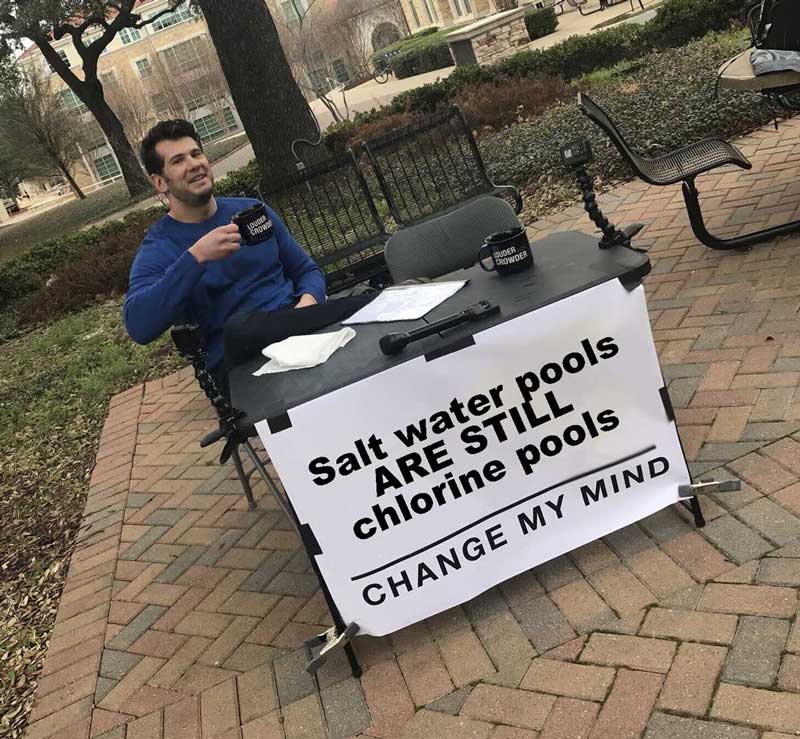
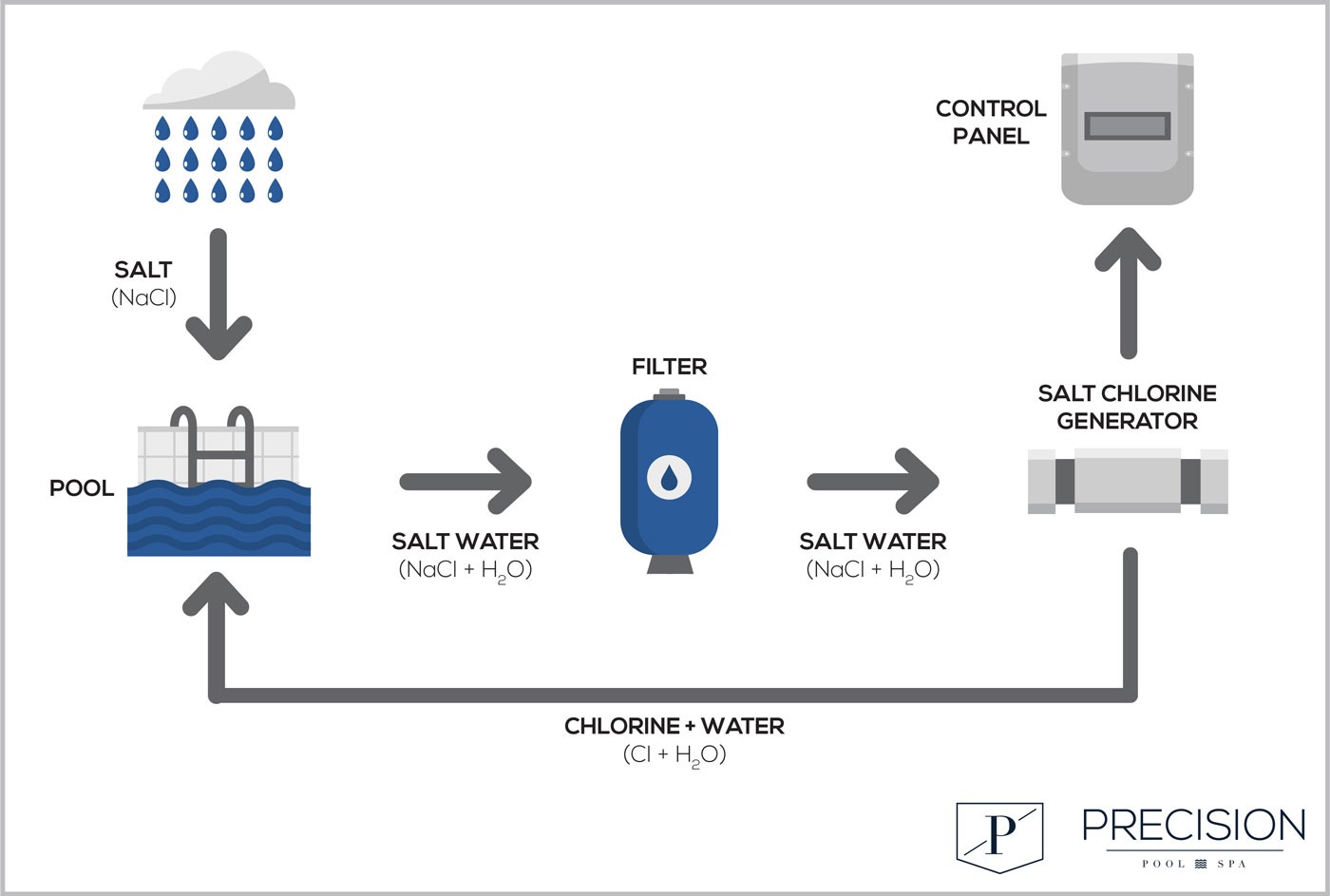
A salt water pool sounds so natural, like the ocean. And healthier than chlorine, right? The truth is that a salt water pool is a chlorine pool. The part that keeps your pool clean is chlorine, but instead of going to the source and using chlorine, a salt water pool extracts the chlorine from the salt using electrolysis.
A salt water pool uses a salt chlorine generator to convert the salt water into chlorine, which then becomes your pool’s sanitizing agent. The salt chlorine generator is attached to the pool’s filtration system, catching the flow of salt water as it flows through.
The salt water enters one side of the generator, which sends a low-voltage current to create a reaction that converts the salt into chlorine. For the science nerds out there, chlorine then mixes with water and produces hypochlorous acid, which actually does the cleaning. It’s easier to give chlorine all the credit.
Why we aren’t fans
People in Rochester “get it” because they watch what salt does to, well everything. It erodes metal, attacks concrete and now when you add an electrical charge in the water it becomes a corrosive mess of keeping your pool nice. Try watering your lawn with salt water, and you don’t have a lawn, so we need to consider your surrounding landscaping as sacrificial in the design process.
What’s different, can I choose later?
You need all different equipment to run a chlorine pool. Everything metal has to be coated or made of stainless to help slow down the corrosion process due to exposure. The chlorine generator is going to last you a few years and then you need to start replacing it, every few years. Most of them are only warrantied for 2 years, knowing they are going to corrode.
So why do people want salt pools?
We almost forgot, we were here to tell you how wonderful your new pool will be.
Salt water pools are so “In” right now. It’s trendy and we saw it on Pinterest, which is how you found this. We hate to say it but it’s true. The same reason that people try trendy diets, because it’s the cool thing to do.
There are actual positives of owning a salt water pool. Annually, you have less investment to keep them balanced. Salt is cheaper than chlorine and the system balances itself out rather nicely. It’s like buying ingredients to make your own bread to cut down on your annual cost of bread.
I’m allergic to Chlorine
News flash: everybody is allergic to chlorine. In concentrated forms it is very caustic and we take it very seriously. Perhaps you jumped in a public pool after they shocked it and had a reaction or perhaps you are super sensitive to chlorine. Let us know. A properly balanced pool doesn’t smell like chlorine, or make your eyes burn.
Considering all expenses, using a salt chlorine generator in your pool costs about the same as traditional chlorine. With that said, as the salt water system itself is more complex than that of a traditional pool, it will require more maintenance, even for something that may be considered a minor problem.
Tanning Ledges: Maximize Your Pool’s Relaxation Value
For pool owners, tanning ledges (also called tanning shelves, baja shelves, and sun ledges) are a fabulous way to experience the luxury of sunbathing while still being able to enjoy the cooling water of their pool.
What is a Tanning Ledge?
This unique oasis is created by installing a level area in your pool that holds between six and nine inches of water. While relaxing on a tanning ledge, suddenly the pool experience truly becomes about enjoying the sun and the refreshing water—no need to worry about toppling off a raft and needing to swim!
How deep is a tanning ledge?
The depth of most tanning ledges is approximately nine inches, meaning that the ledge itself is no more than 12 inches deep. At this water level, many activities that are less possible at deeper depths become enjoyable, and the pool becomes a place where more people are able to relax.
When designing your tanning ledge, keep in mind that the depth of the tanning ledge will determine the amount of water that is in it, which becomes important when you are considering who will be using the tanning ledge most often. Typically, there are three inches of space between the surface of the water and the top of the pool’s edge. For example, a nine-inch-deep ledge will provide six inches of water; this depth is perfect for small children and pets.
How much space does a tanning ledge take up?
Many people choose to bring furniture onto their tanning ledges, creating a cooling space to enjoy a drink and a book. To accommodate this, tanning ledges are generally at least five feet wide, offering enough space for one or more lounge chairs. For those hoping to bring out an umbrella or a small table, a larger space may be necessary.
Who Benefits from Using a Tanning Ledge?
Tanning ledges open up the pool for use by many people who otherwise might shy away from the water. For instance, for those with mobility issues, tanning ledges provide the perfect depth for being able to use a larger area of the pool without needing to negotiate stairs. Tanning ledges also offer a safe space for your younger loved ones to enjoy the water. As tanning ledges can be designed to be entirely separate from the deeper areas of the pool, families often use tanning ledges as a shallow place for children—or pets!—to play.
Customization is Key
Besides the practical aspects of having a tanning ledge, there are many ways to customize the design of your ledge to increase its unique factor. Many people add lights and bubblers—these sensory accessories provide a more enriching visual and aural experience, especially in the evening hours. Lights can come in any color and can be customized to change at different intervals or at certain times. Bubblers shoot a stream of water above the pool’s surface, creating a fountain effect. You can even combine the two features: Many bubblers come with lights built in! A favorite of every pool-dweller, lights and bubblers add a tranquility to the tanning ledge experience.
Imagine a built-in umbrella stand creating a little shade for the especially sunny days. Adorn your tanning ledge with matching tile or a custom mosaic tile design. Add a bubbler or a waterfall to your sun shelf and you’ll have the perfect place to relax and enjoy your pool.
Because we design every pool completely custom, you will have the luxury of creating the perfect size, shape, and location of your tanning ledge.
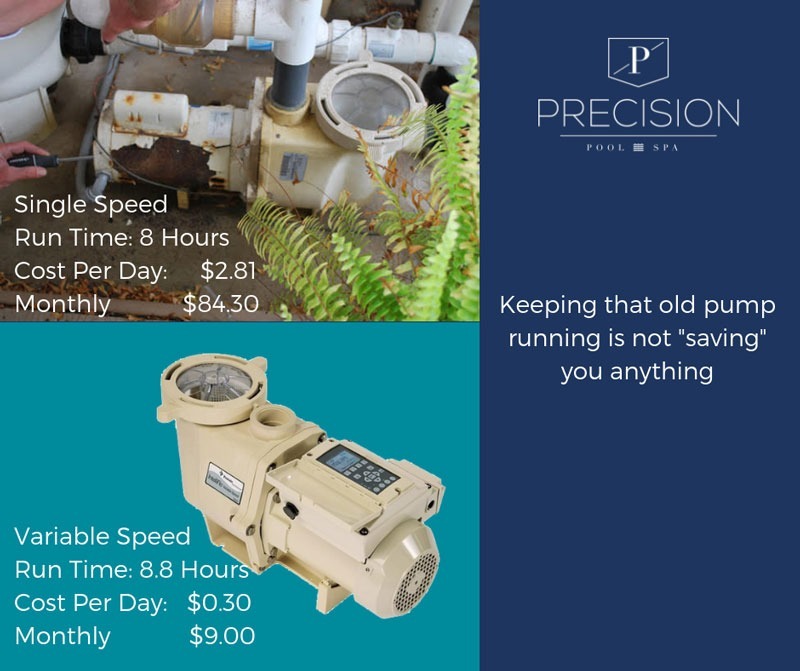
It might be time for a new pool pump. Most people wait until their pool pump dies before they look for a replacement, but it might be the one thing that saves you money if you do it sooner than later. This might go against everything you have been raised on, but..Replacing your single speed pump with a variable speed pump gives your pool a quieter, more efficient circulation system that ultimately will save you money.
How can a pump that costs more, save money?
The difference in pumps is exactly how it sounds: a single-speed pump operates at one speed no matter what type of work it is performing, while a variable-speed pump can be adjusted to achieve the ideal filtration flow rate with the least amount of energy consumption. Basically, variable speed pumps work efficiently and effectively, while single-speed pumps run constantly at maximum flow rate, consuming HIGH energy often around the clock, and a majority of the time providing too much circulation than the pool filtration system actually needs. Yes, there is waste, even in pool pump energy.
According to a recent study by the National Renewable Energy Laboratory, a pool pump can be the second largest energy user — and most often is the largest energy user — in the home. Switching to a variable speed pump, however, can reduce pool pump energy use by 50 to 75 percent (or even more depending on your usage factors). In addition to saving energy, variable speed pumps are noticeably quieter, require less maintenance, last longer, and, through slower water filtration rates, allow for better and more effective filtration of the pool water.
There are other benefits to changing pumps, beyond just energy savings. The slower circulation rates also put less strain on the filters, plumbing, and other parts of the system, which reduces the chance of leaks, repairs, or premature plumbing component replacement.
Overall, upgrading your pool pump to a variable speed model will protect your pool better, enhance your swimming enjoyment, and save you money in the long run. Variable speed pumps do cost more than single speed, but the energy savings achieved by the upgrade typically pay for the higher cost within the first year.
How do I know?
Check you pump model and power ratings. Our friends at Pentair have devised a pump calculator which will determine how much more efficient your system can run with the new variable speed pumps.
Pool Pump Calculator
Pentair has this very effective pool pump calculator that helps you visualize the difference based on the pump and the size of your pool.
Watching the downpour from a summer rainstorm teem across the surface of your pool is a great sight, but it’s important to remember that heavy rain can affect your pool’s water quality. A heavy storm with lots of rainfall can change the chemical balance in the pool water, overflow your pool, and introduce contaminates from the air, rain, and runoff.
Rainwater is acidic (the level of acidity depends on where you live) and naturally has a lower pH level than pool water. If enough rain fills a pool, it can lower the pH levels. This directly affects swimmers’ comfort — when people complain of burning eyes from pool water, it’s not because of too much chlorine, but because of low pH.
Besides acidity, a heavy storm can bring foreign contaminants into your pool that also could have a negative impact. Without proper drainage around your pool, water runoff can introduce elements that can change the calcium, hardness and alkalinity in your water, as well as bring in dirt and debris that can damage surfaces and equipment. Heavy rains can also deposit airborne debris and algae spores into water, which can, along with the chemical imbalance, lead to quicker algae growth — and nobody wants a green pool.
What does this mean for you as a pool owner? It means that it is important to have your pool water checked weekly to ensure the best chemical balances to prevent recreational water illness and protect the lifespan of the equipment and swimmers’ comfort. You’ve created the pool you’ve always wanted, and, just like your car, your boat, or your body, you need to keep it finely tuned.
We at Precision Pool and Spa offer weekly water testing for chlorine, pH and overall alkalinity, to help keep your pool in top shape. By performing weekly tests, we can keep the water at the optimal balance for the health of your pool avoiding excessive chemical corrections. For more information, check out our service programs where we test you pool and keep it in balance.
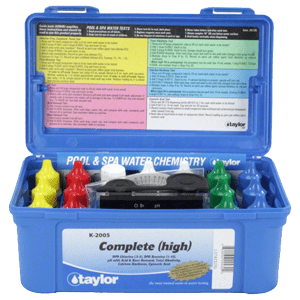
CHECK YOUR TEST KIT
A proper test kit is your security blanket in knowing you have the right levels for your pool. The most reliable and accurate kits are still the most essential.
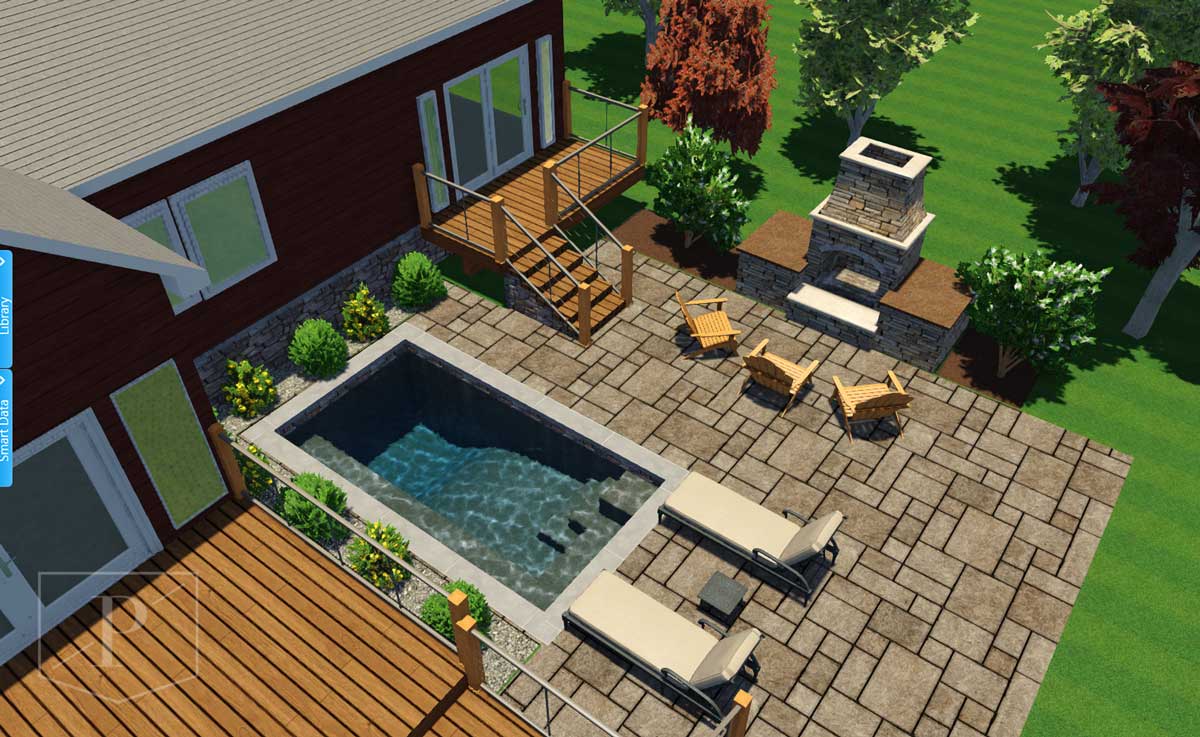
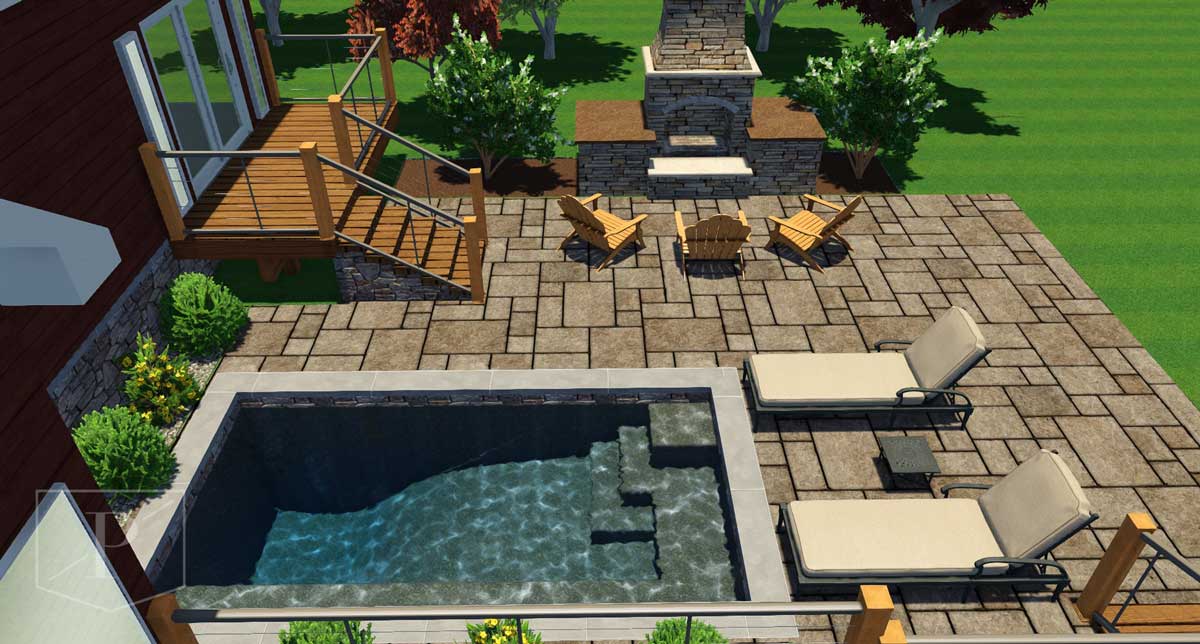
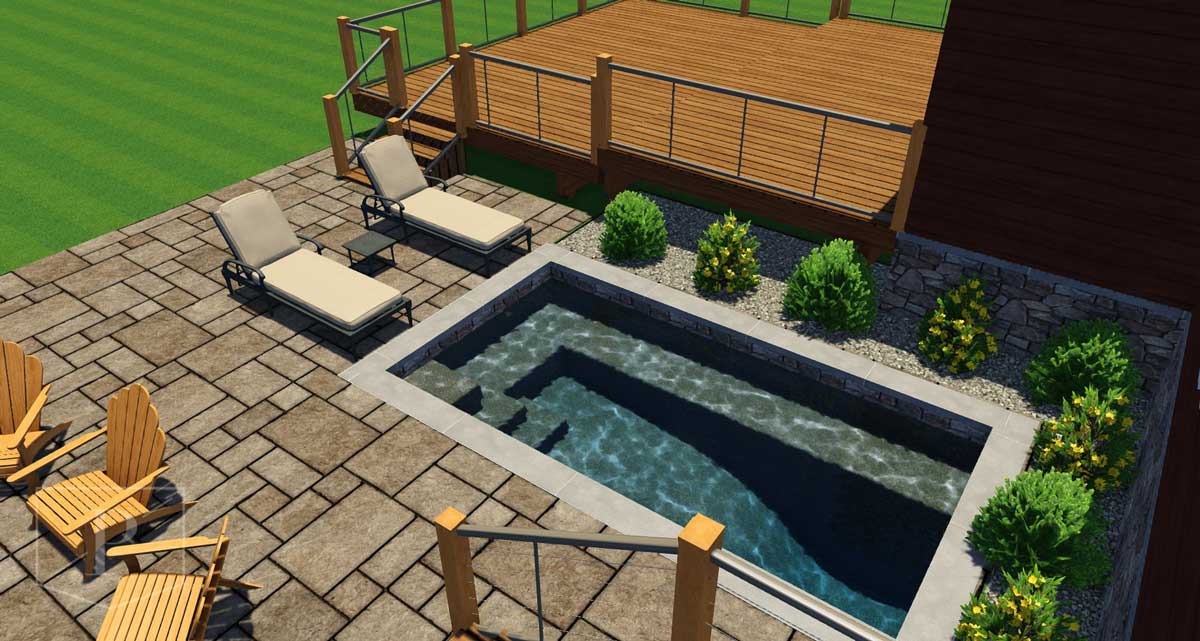
A Spool, or a Small Pool, is a smaller pool design created as a solution to having a swimming pool fit for a small backyard or limited space. While it was originally designed as the solution to fit into small yard, Spools are quickly becoming the hottest trend for any size yard and small families.
While they can be customized to any size, they would typically be 10-16 feet long and 6 to 8 feet wide. They are much smaller than in-ground swimming pool, but nearly twice the length of an average spa.
What options are there?
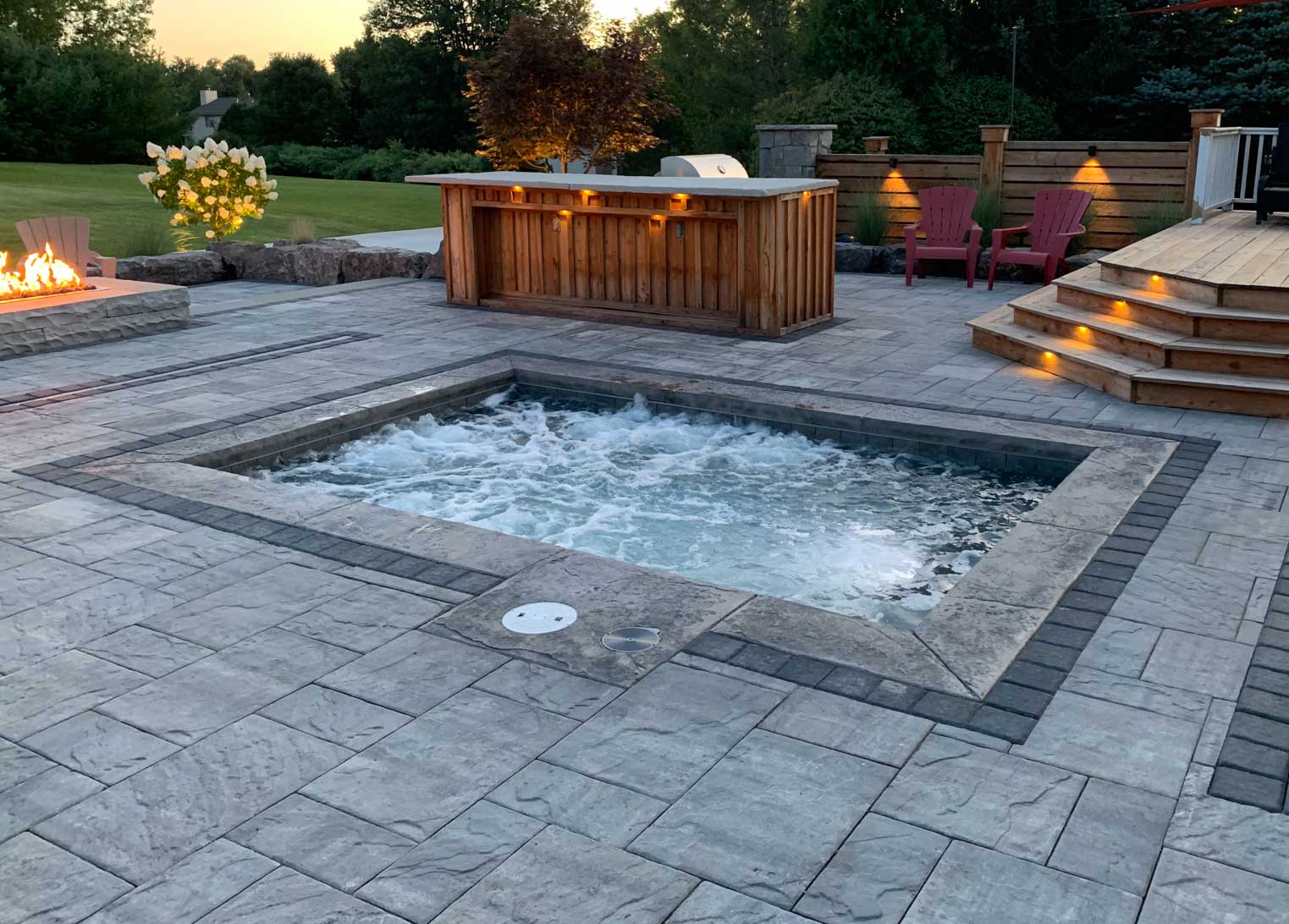
Spa Spool – The natural build out of this space is to make sure it isn’t just a pool but also a spa. Ideal for homes in the Northeastern part of the country, a combination build can be enjoyed year round. Cool and refreshing during the hot months while a heater turns it into a large in-ground hot tub that can fit 15 people or more.
Lap Spool – Take a small pool and add powerful pump designed for making current and you have yourself the perfect lap pool. Swim against the current for the perfect fitness solution.
Bar Spool – Space is limited in the backyard, this makes the ultimate addition to a custom outdoor kitchen. Custom seating solutions and countertop edging will give you the best place to relax and enjoy a few cocktails.
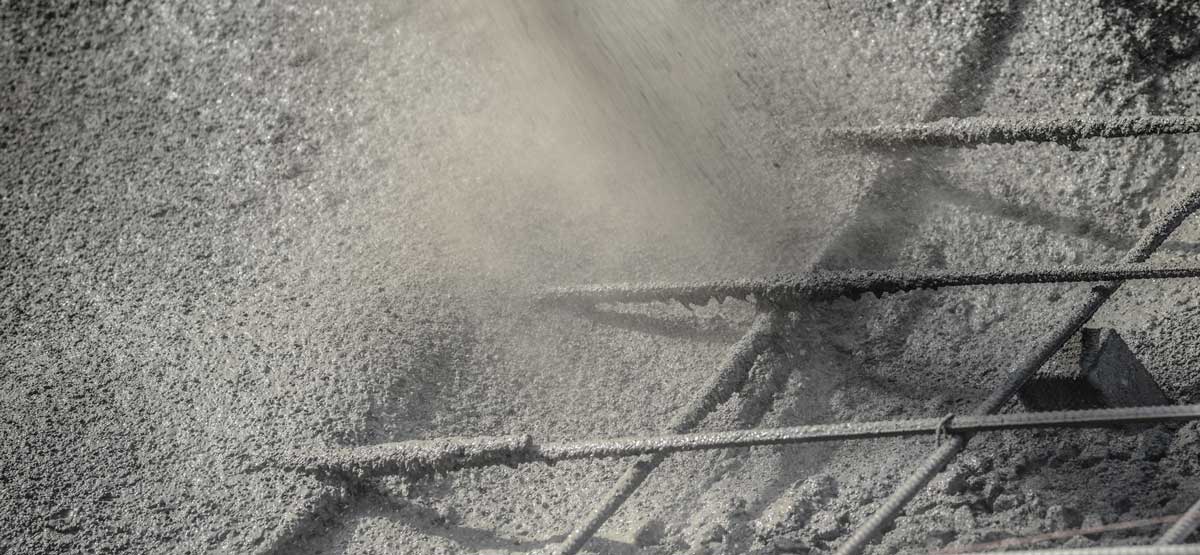
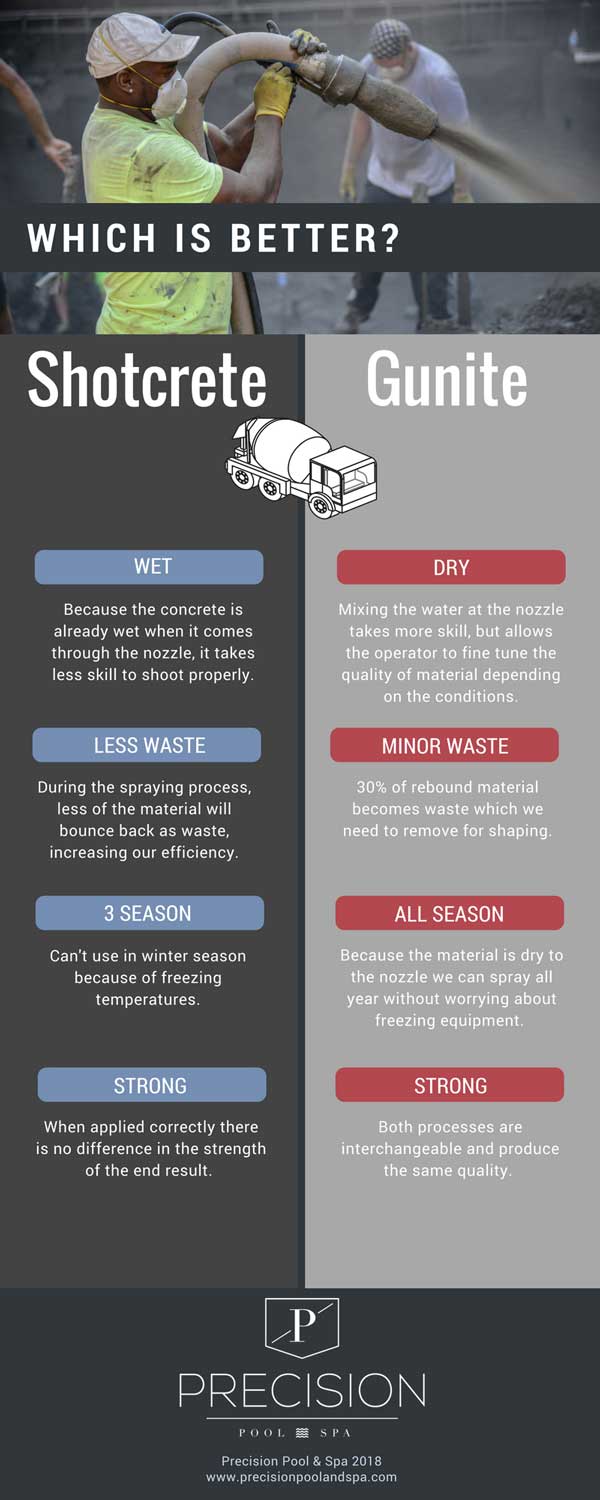
Shotcrete is not new. It has been around since the mid-60’s and outside of the pool industry is not really differentiated in how pneumatically applied concrete is referred to. Call a sprayed concrete pool a gunite pool or call it a shotcrete pool and you will not be wrong. The difference is in the process, the equipment, and the material.
Here is a quick comparison of the two, but really the only difference is that Gunite uses a dry mix where water is added at the nozzle, and Shotcrete uses a wet mix of concrete.
We usually see more shotcrete out west or down south where the temperatures allow them to work with wet material, not needing to worry about freezing. Here in upstate NY, we plan to work throughout the winter, so most companies use gunite.
FAQS
Does this affect the cost of my pool?
No. The processes are interchangeable and we will use the best solution to match the job and the environment that day. The material and labor costs remain the same.
Where does the waste go?
For us waste is excess material from the spray. We scrape it off so we can get to the shaping layers of the gunite. For large projects we can distribute the waste to over-dug areas of the project area or ultimately haul it away in buckets to get recycled.
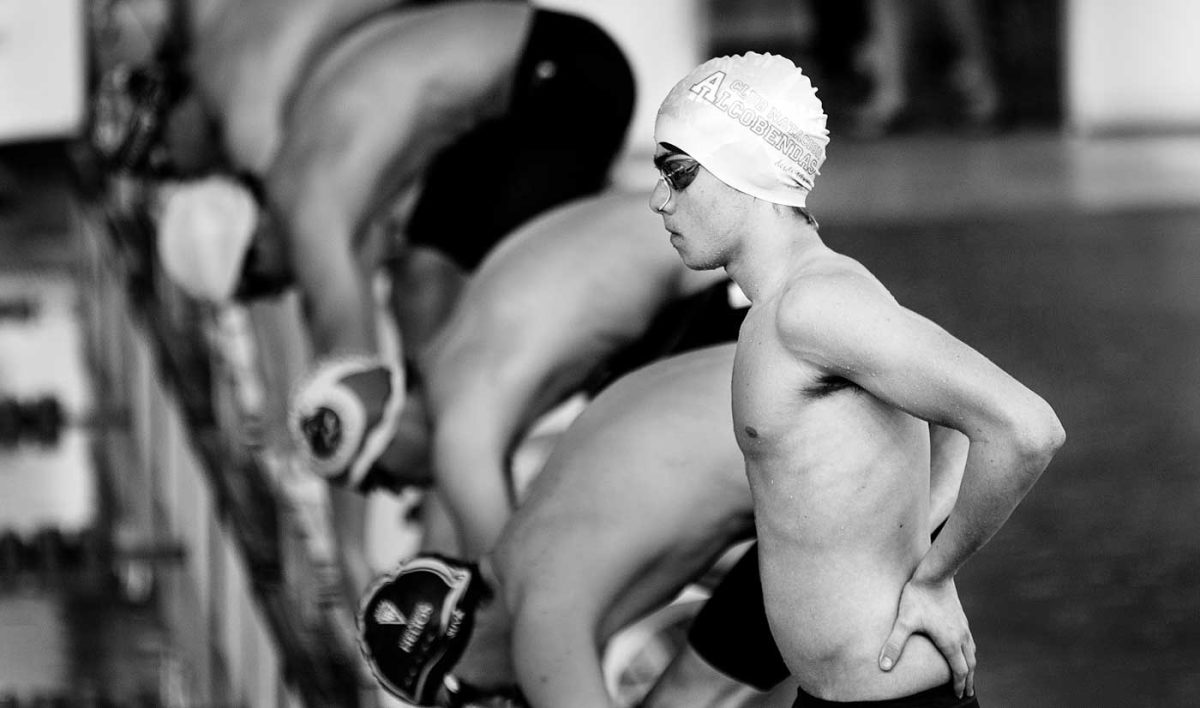
It’s an Olympic time of year. The Winter Olympics are in Pyeongchang South Korea and the patriot pride is running high. While all the water events this year involve frozen water, the summer Olympics are in Tokyo in 2020 when swimming returns, it’s a perfect time to talk about training and swimming in actual Olympic Pools.
So what exactly goes into the design of an Olympic pool and how are they different from the pools the rest of us swim in on a regular basis?
Competitions can’t be held in just any large pool. There are specific requirements to graner the label “Olympic.” These regulations are determined and enforced by the Federation Internationale de Natation (FINA).
Although each pool has its own style design to match the venue, there are some guidelines they all have to follow when designing the layout and size.
Highlights of Olympic Pool Design
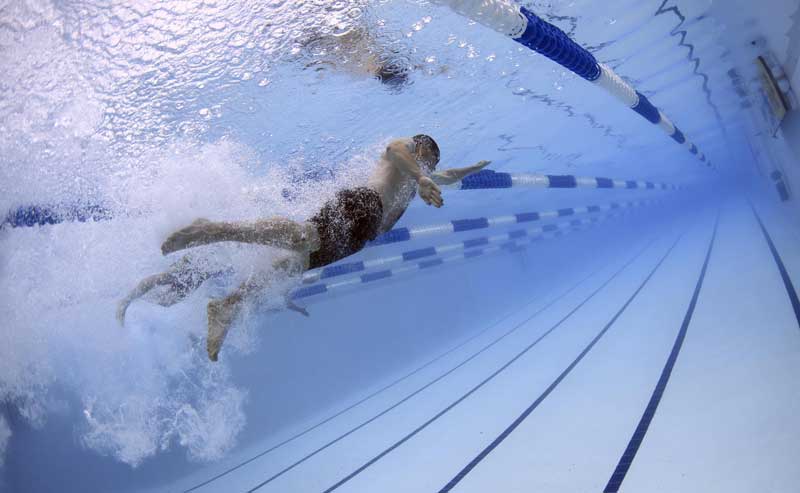
Depth: Minimum 2 meters deep. No restriction on max.
Length: 50 meters long. (+.030m tolerance to accomodate touch panels.)
10 lanes: 8 for swimmers, two for buffering waves
Lane width of 2.5 meters with a buoyed rope
Lines marking the lanes on the bottom of the pool
6 ½ feet before the end, the bottom lane line stops to notify swimmers
A false start rope placed 15 meters from the start line
A flagged backstroke turn line placed almost 4 feet above the surface
Changes and Trends
2009 – FINA Congress rules were approved for 10-lane courses for competition, as an alternative to the more traditional 8-lane course. In RIO the outside lanes were used to buffer the waves for the outside swimmers.
What Makes a Pool Faster?
Depth. “A fast pool typically has at least three meters of depth to it,” says Teri McKeever, head coach of the University of California’s women’s swimming team, and who served as the U.S. head coach at London 2012. “The deeper the pool is the better, because the splash or the turbulence and everything takes longer to get down to the bottom and then it doesn’t ricochet back up into the swimmers.”
Notable Olympic Pools in History
While the very first olympic swimming events weren’t held in pools, much has changed since they changed from “Nautical Games” in rivers, lakes, and oceans to our modern swimming events. Controlling the environment and making sure it is equal level for everybody involved is a crucial component when you are running an International competition watched by the world. Here are some of the more notable moments and pools in the history of the Olympics, each one playing a major role in it’s growth as a sport.
1924: Paris’ Olympic Swimming Pool
The very first Olympic swimming pool made its debut in the 1924 Olympics. Piscene Georges Vallerey pool still exists today. It has some major upgrades and will be hosting the 2018 Gay Games within its walls.
It’s original features include:
A considerably shallow depth of less than 10 feet
A width of approximately 82 feet
Spectator seating up close and personal to the poolside
Narrow pool decks
1996: Atlanta’s Olympic Swimming Pool
The pool at Atlanta’s Summer Olympics was specifically designed. It boasted unique architecture with an outdoor and indoor feel. The pool’s sides were open to the elements, but it had a roof covering the entire area.
More adaptable than the first Olympic pool 72 years prior, this pool’s design included:
108 foot length and 72 foot width
Spacious pool decks
Outdoor opening which offered cool breezes to combat the humidity
An adjustable floor that could be set to a specific depth: 8 feet for the competition
2008: Beijing’s Olympic Swimming Pool
As records fell in the 2008 Beijing swim events, physics reigned supreme. The design of China’s pool enhanced the ability of swimmers to maximize their potential. How? The design took wave dissipation, optimal conditions for vision, and lane placement into consideration.
Here are the changes that resulted in the fastest pool to be utilized at the time:
10 lanes instead of 8
Perforated gutters to suck the waves out of the way
10 feet deep instead of 7
Expansive stadium to give athletes space to focus
2016: Rio’s Olympic Swimming Pool
Although Rio De Janeiro’s Olympic Pool did not house as many falling records as China’s fast pool, it crushed the records set in London during the 2012 Olympics. It is heralded as another fast pool, just not the fastest.
Rio’s pool had the technology but was missing some of the components of the pool in Beijing. Here’s what Rio had to offer:
Deeper pool to dissipate waves instead of bouncing them back to athletes at 10 feet
Gutters and bumpers between lanes designed to stabilize the water
10 lanes to provide space for waves to be absorbed
Flat walls that allowed for slightly higher circulation of waves
Lap Pools vs Lane Pools
Outside of an actual olympic pool, there are two good options to keep your training alive. Lap Pools are for swimming endurance, but not necessarily to simulate the experience of the event pool. Equipped with a high speed jet, “which you cannot swim faster than” they are a great option to get some pace timing in. Lane Pools we create to mimic the the swim of any sized pool you want, including olympic pools. Any ideal lane pool will include enough width to prevent wash back off the walls, and be exactly 50 meters. If counting reps is the important factor and space is limited, we would consider a 25 meter pool, breaking your distance in half, but adding more reps to the rotation.
Summer’s long nights are being replaced by autumn’s cool breezes. Upstate New Yorkers are trading in their marshmallowey s’mores and bathing suits for pumpkin spice and muck boots. Open windows are being pulled shut and preparations for winter are emerging everywhere. Pools are being closed, shorts are getting packed away and the birds are migrating. But winter isn’t here just yet and that is great news for all of the warm weather lovers out there!
If you’re a warm weather fan, there are a few things you can do to hang on to the sunshine season without traveling south with the geese.
Optimizing Gunite Pool Heat
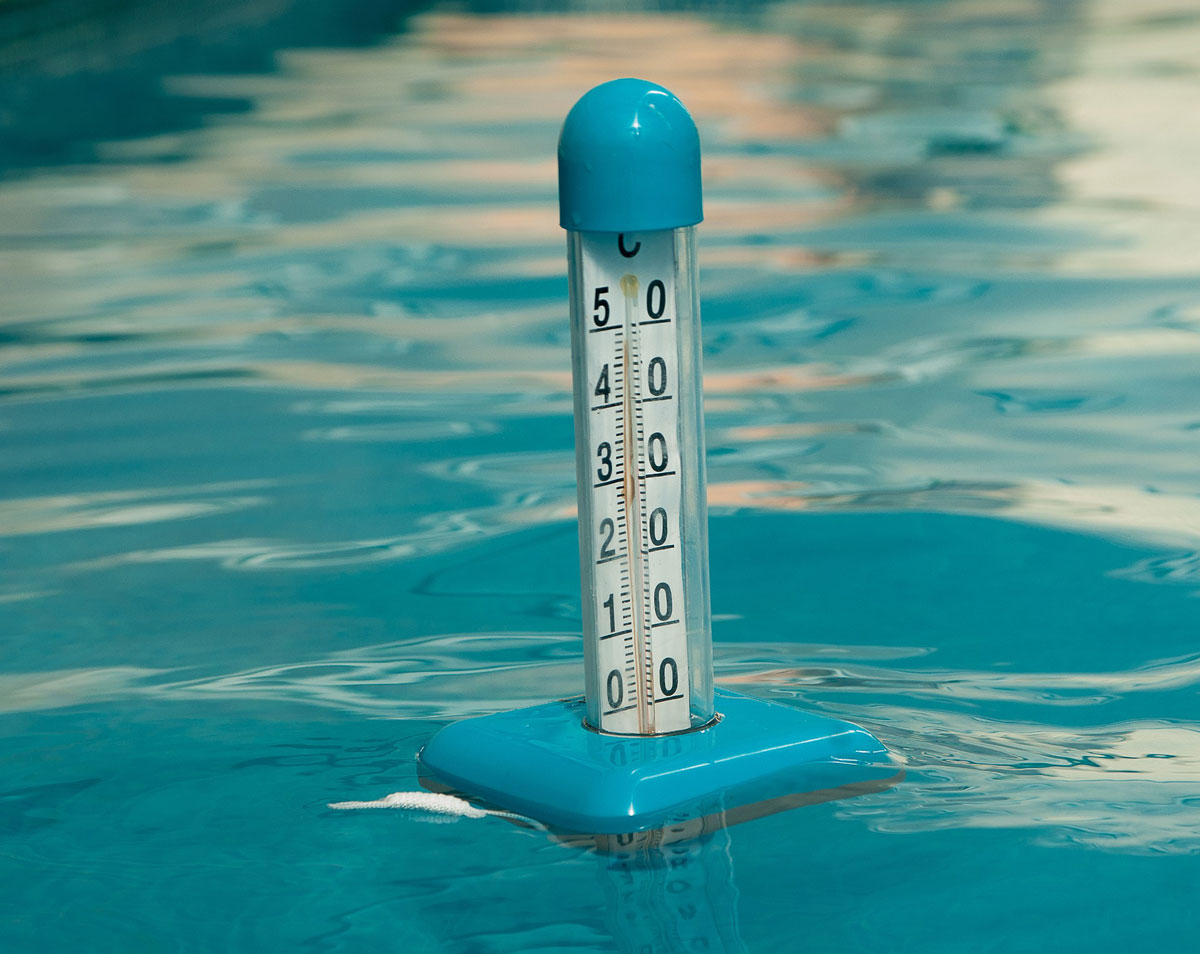
You don’t need to be a polar plunger to enjoy the pool beyond August. All you need is a higher temperature for the water. This doesn’t mean you have to turn your swimming pool into a sauna, it just means you can raise it up a notch to take the bite out of the autumn air. Here are some concepts as to how and why your pool can hold onto that heat and you can keep swimming.
Geothermal heat retention. Imagine your favorite travel mug for a moment. Have you ever watched a barista heat up your coffee mug before pouring coffee into the mug? By having a material already heated around the liquid, you are conditioning that mug, which will keep your coffee warmer, longer. Your gunite pool is a huge heat sink that has the heat retained from the ground around it. This time of year, that keeps your water temperature from dropping faster than the other the air temperature outside does.
Put a lid on it. With your pool surrounded by a warm cozy layer of gunite, the number one cause of heat loss is out the top. An insulated solar cover this time of year doesn’t bring heat in with the solar rays, but helps insulate and retain that heat, especially at night when the air temperature drops.
Temperature Homeostasis. Homeo-what-sis? Let’s stick with the home analogy to describe this one. During the cold season it is normal to have the temperature on the thermostat change based on whether the family is home or out and about. When doing this, it’s important to make sure the change is minimal because more energy (and likewise more money) is used to raise the temperature more than 5 degrees at a time. Many families use this strategy to heat their homes. The same is true for pools. When extending your swim season by raising the heat of your pool, put it on a timer or change it in small increments at a time. In the end leaving your pool at a higher temperature is more cost effective and efficient than fluctuating the temp drastically when you aren’t using it.
What if you don’t have a pool?
Autumn is for Pool Planning
It seems a little backwards to buy a pool after swim season is over, but the truth is: now is the time to plan.
We are installing pools through December, and our schedule books deep into next year, so it is important to get your name on the calendar as soon as possible. More importantly, right now is when the little nuances of your yard and habits are fresh in your mind. If you wait a few months you might not remember where the sun shines best, where the leaves tend to gather, or which part of your deck and backyard is most convenient for lounging. All of these details factor into what size, shape and location is best for your pool. Thinking about a future pool could bring some warm thoughts to sustain you through the cool nights too!
What to know what to consider through all four seasons when planning your pool? Give us a call or stop into our new indoor/outdoor learning patio. We totally built a fully stocked patio inside and outside our office, so we can ignore the seasons completely.

 You don’t need to be a polar plunger to enjoy the pool beyond August. All you need is a higher temperature for the water. This doesn’t mean you have to turn your swimming pool into a sauna, it just means you can raise it up a notch to take the bite out of the autumn air. Here are some concepts as to how and why your pool can hold onto that heat and you can keep swimming.